Establishing a Child’s Personality via the Projective Assessment Triad within the Four Levels of Mind
DOI:
https://doi.org/10.64663/aet.62Keywords:
Mental Levels of Mind, Personality, Projective Assessment TriadAbstract
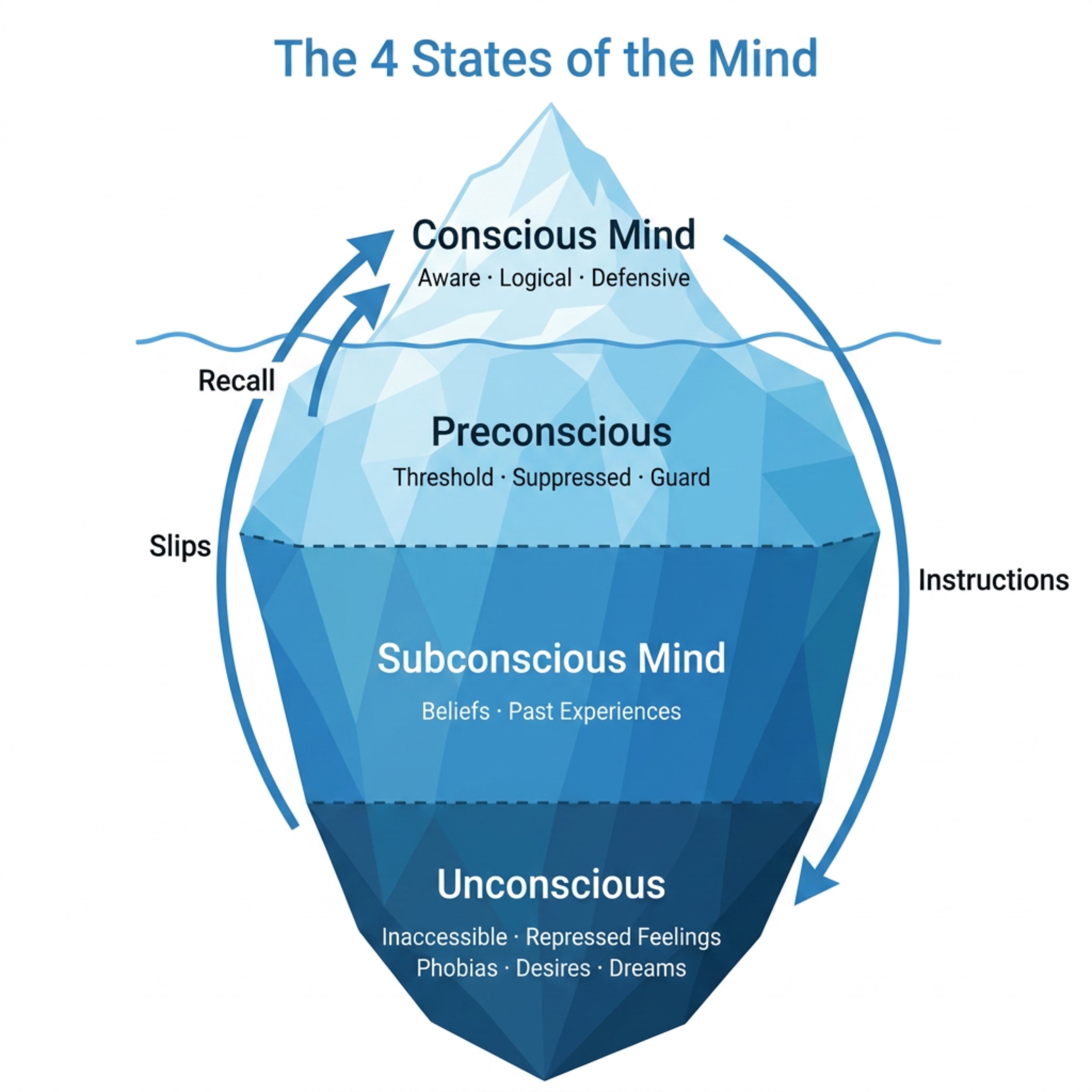
In this short article, the author explained the theoretical basis for the need to establish a child’s personality using projective assessment triad within the context of the four mental levels of mind in terms of (i) conscious, (ii) preconscious, (iii) subconscious, and (iv) unconscious. The term projective assessment triad (PTA for short) used by the author refers to three different projective tests (e.g., projective drawing tests, incomplete sentence tests and word association tests) of personality, which according to Friedman and Schustack (2001), may involve some degree of ambiguity in the test instructions or stimuli in order to create opportunities for an examinee to structure his/her responses in terms of his/her individual personality characteristics. In this way, the examinee can provide authentic information about the nature of these characteristics.
References
Akee, R., Copeland, W., Costello, E. J., & Simeonova, E. (2018). How does household income affect
child personality traits and behaviors? American Economic Review, 108(3), 775-827.
Bellak, L. (1975). The TAT, CTA and SAT in clinical use. New York, NY: Grune & Stratton.
Bellack, A. S., & Hersen, M. (Eds.). (1998). Comprehensive clinical psychology. New York, NY: DOI: https://doi.org/10.1016/B978-0-08-042707-2.09005-2
Pergamon.
Bellak, L., Hurvich, M., & Gediman, H.K. (1973). Ego functions in schizophrenics, neurotics, and
normals. New York, NY: John Wiley & Sons.
Cambridge University Press (2021). Personality. In Cambridge English Dictionary. Retrieved from: DOI: https://doi.org/10.26226/morressier.60c8d83cbea1445efd9a1905
https://dictionary.cambridge.org/dictionary/english/personality.
Chia, K. H., & Lee, B. M. (2017, Fall). Understanding why people behave the way they behave.
Unlimited Human! 5-7.
Chia, K. H., & Lim, B. H. (2017, Summer). Social –emotional behavioral reactions/responses in
psychosocial complexes. Unlimited Human! 5-7.
Entwisle, D. R. (1995). The role of schools in sustaining early childhood program benefits. The Future DOI: https://doi.org/10.2307/1602371
of Children, 5(2), 133-144.
Erikson, E. H. (1950). Childhood and society. New York, NY: Norton.
Eysenck, H. (2018). Dimensions of personality. New York, NY: Routledge. DOI: https://doi.org/10.4324/9780203793268
Frank, L. K. (1948). Projective Methods. Springfield, IL: Thomas. DOI: https://doi.org/10.1037/14920-000
Freud, S. (1900). The interpretation of dreams. Standard Editions, 5 (p. 4-5). London, UK: Hogarth
Press.
Freud, S. (1905). Three essays on the theory of sexuality. Standard Editions, 7 (pp. 123-246). London,
UK: Hogarth Press.
Friedman, H. S., & Schustack, M. W. (2001). Readings in personality: Classic theories and modern
research. Needham, MA: Pearson Education Company.
Hall, J. A. (1992). Psychological-mindedness: A conceptual model. American Journal of Psychotherapy, DOI: https://doi.org/10.1176/appi.psychotherapy.1992.46.1.131
46, 131-40.
Harder, D. W. (1979). The assessment of ambitious-narcissistic character style with three projective DOI: https://doi.org/10.1207/s15327752jpa4301_3
tests: The early memories, TAT, and Rorschach. Journal of Personality Assessment, 43(1), 23-32.
Jeong, M., Zo, H., Lee, C. H., & Ceran, Y. (2019). Feeling displeasure from online social media postings:
A study using cognitive dissonance theory. Computers in Human Behavior, 97, 231-240.
Josephs, M., House, E., Holden, S., & Foskett, L. (2021). Creative Therapies (Art and Play). In Child DOI: https://doi.org/10.4324/9781003083139-62
and Adolescent Mental Health (pp. 411-420). Boca Raton, FL: CRC Press.
Loar, B. (1999). David Chalmers's The Conscious Mind. Philosophy and Phenomenological Research, DOI: https://doi.org/10.2307/2653684
LIX(2), 465-472.
Patra, S., & Sharma, R. (2020). Unit-2: Assessment of personality. New Delhi, India: Indira Gandhi
National Open University,
Rabin, A.I. (1981). Assessment with projective techniques: A concise introduction. New York, NY:
Springer.
Roger, R. E. (2008). Research dissimulation. In R. E. Rogers (Ed.), Clinical assessment of malingering
and deception (2nd ed., pp. 309-327): New York, NY: Guilford Press.
Teglasi, H. (2013). Techniques as Performance Measures. In D. H. Saklofske, C. R. Reynolds, & V. L.
Schwean (Eds.). The Oxford handbook of child psychological assessment (pp. 113-128). New York,
NY: Oxford University Press.
Vaidyanathan, S., Menon, V., & Sarkar, S. (2018). Identifying patient profiles suitable for cognitive
behavior Therapy: The role of psychological mindedness. Journal of Neurosciences in Rural
Practice, 9(04), 654-655.
Wallendorf, M., & Brucks, M. (1993). Introspection in consumer research: Implementation and DOI: https://doi.org/10.1086/209354
implications. Journal of Consumer Research, 20(3), 339-359.
Weston, D. (1999). The scientific status of unconscious processes: Is Freud really dead? Journal of DOI: https://doi.org/10.1177/000306519904700404
the American Psychoanalytic Association, 47(4), 1061-1106.
Downloads
Published
How to Cite
Issue
Section
License
Copyright (c) 2025 The Asian Educational Therapist

This work is licensed under a Creative Commons Attribution 4.0 International License.