
Navigating Educational Therapy: A Case Study of a 10-year-old Boy with Autism
DOI:
https://doi.org/10.64663/aet.31Keywords:
Autism Spectrum Disorder, ASD diagnosis, Educational therapy, Case management system, Social interactionsAbstract
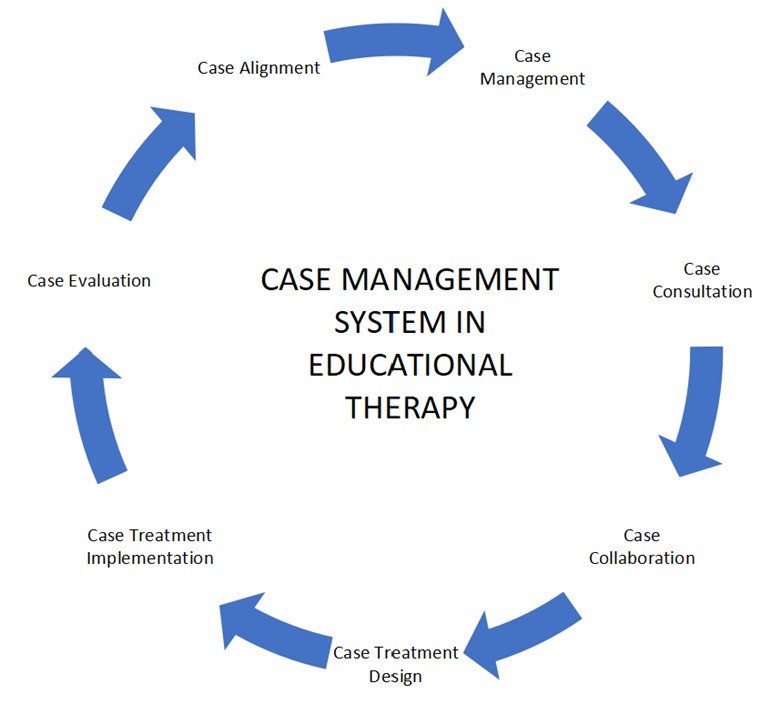
This case review explores the journey of Alex (not his real name) and his parents as they navigate the challenges of autism spectrum disorder (ASD) diagnosis and management. Initially, the child’s parents sought professional guidance due to Alex’s difficulties in social interactions and communication. A comprehensive evaluation confirmed his diagnosis using standardized assessment tools. The family embarked on understanding and managing Alex’s unique needs, particularly within educational therapy. Utilizing a 7-step case management system, the author of this paper delves into the experiences, challenges, and successes encountered by the child and his parents throughout the process.
References
Benn, R., Akiva, T., Arel, S., & Roeser, R. W. (2012). Mindfulness training effects for parents and educators of children with special needs. Developmental Psychology, 48(5), 1476-1487. DOI: https://doi.org/10.1037/a0027537
Chia, K. H., & Chia, G. Z. H. (2015). A proposed framework on working with parents of children with special needs in Singapore. IOSR-Journal of Humanities and Social Science, 20(2; Ver.V), 87-93.
Flannery, K. B., & Hellemn, L. A. (2015). Building strategically aligned individualized education programs for transition. The Journal of Special Education, 49(2), 67-76. DOI: https://doi.org/10.1177/0022466914521771
Horsman, A. R. (2022). Identity of disability: A modern-historical comparison of living in North American societies with deafblindness. New Brunswick, Canada: The Unlibrarian.
Hougaard, E. (1994). The therapeutic alliance–A conceptual analysis. Scandinavian Journal of Psychology, 35(1), 67-85. DOI: https://doi.org/10.1111/j.1467-9450.1994.tb00934.x
Johnston, C. L. (1984). Educational therapy: Past perspectives, current practices, and a proposal for change. Journal of Learning Disabilities, 17(4), 200-204 DOI: https://doi.org/10.1177/002221948401700402
Jozwik, S. L., Cahill, A., & Sánchez, G. (2018). Collaboratively crafting individualized education program goals for culturally and linguistically diverse students. Preventing School Failure: Alternative Education for Children and Youth, 62(2), 140-148. DOI: https://doi.org/10.1080/1045988X.2017.1393791
Kempson, R. L. (1978). Consultation case. The American Journal of Surgical Pathology, 2(3), 321-326. DOI: https://doi.org/10.1097/00000478-197809000-00009
Koegel, L. K., & Ashbaugh, K. (2017). Communication and autism spectrum disorder. Curricula for Teaching Students with Autism Spectrum Disorder, 47-70. DOI: https://doi.org/10.1007/978-3-319-69983-7_3
Krug, D. A., Arisk, J. R., & Almond, P. J. (1980a). Autism screening instrument for educational planning. Austin, TX: ProEd.
Little, C. (2017). Social inclusion and autism spectrum disorder. In C. Little (Ed.), Supporting social inclusion for students with autism spectrum disorders (pp. 9-20). New York, NY: Routledge. DOI: https://doi.org/10.4324/9781315641348-2
Lord, C., Rutter, M., DiLavore, P. C., Risi, S., Gotham, K., & Bishop, S. L. (2012). Autism diagnostic observation schedule-2nd edition (ADOS-2). Torrance, CA: Western Psychological Services.
Merlion Paediatric Therapy Clinic (2023). Prodromal screener for autism spectrum condition (PS-ASC). Singapore: Merlion Paediatric Healthcare Group.
Pachița, I. C., & Gherguț, A. (2023). Perceived stress, mental well-being and coping on parents of disabled children from mainstream and special schools. Logos Universality Mentality Education Novelty: Social Sciences, 12(1), 121-139. DOI: https://doi.org/10.18662/lumenss/12.1/83
Pua, E. P. K., Thomson, P., Yang, J. Y. M., Craig, J. M., Ball, G., & Seal, M. (2021). Individual differences in intrinsic brain networks predict symptom severity in autism spectrum disorders. Cerebral Cortex, 31(1), 681-693. DOI: https://doi.org/10.1093/cercor/bhaa252
Robertson, A. E., & Simmons, D. R. (2013). The relationship between sensory sensitivity and autistic traits in the general population. Journal of Autism and Developmental Disorders, 43, 775-784. DOI: https://doi.org/10.1007/s10803-012-1608-7
Rutter, M., Le Couteur, A., & Lord, C. (2003). Autism diagnostic interview-revised (ADI-R). Los Angeles, CA: Western Psychological Services. DOI: https://doi.org/10.1037/t18128-000
Tapias, E., Coromina, M., Grases, N., & Ochoa, S. (2021). Psychological treatments with children of parents with mental illness: A systematic review. Child Youth Care Forum, 50, 1107-1130. DOI: https://doi.org/10.1007/s10566-021-09608-2
Uljarević, M., Baranek, G., Vivanti, G., Hedley, D., Hudry, K., & Lane, A. (2017). Heterogeneity of sensory features in autism spectrum disorder: Challenges and perspectives for future research. Autism Research, 10(5), 703-710. DOI: https://doi.org/10.1002/aur.1747
VanDerHeyden, A. M., Witt, J. C., & Gilbertson, D. (2007). A multi-year evaluation of the effects of a response to intervention (RTI) model on identification of children for special education. Journal of School Psychology, 45(2), 225-256. DOI: https://doi.org/10.1016/j.jsp.2006.11.004
Wesson, C. (1982). Research on developing and monitoring progress on IEP goals: Current findings and implications for practice. Washington, DC: Office of Special Education and Rehabilitative Services.
White, B. A. (2022). Planning for special education services: A primer for health-care professionals. In P. McPherson (Ed.), Handbook of treatment planning for children with autism and other neurodevelopmental disorders (pp. 215-238). Cham, Switzerland: Springer International Publishing. DOI: https://doi.org/10.1007/978-3-031-06120-2_12
Yell, M. L., & Stecker, P. M. (2003). Developing legally correct and educationally meaningful IEPs using curriculum-based measurement. Assessment for Effective Intervention, 28(3-4), 73-88. DOI: https://doi.org/10.1177/073724770302800308
Zuscak, S. J., Peisah, C., & Ferguson, A. (2016). A collaborative approach to supporting communication in the assessment of decision-making capacity. Disability and Rehabilitation, 38(11), 1107-1114. DOI: https://doi.org/10.3109/09638288.2015.1092176
Downloads
Published
How to Cite
Issue
Section
License
Copyright (c) 2024 The Asian Educational Therapist

This work is licensed under a Creative Commons Attribution 4.0 International License.