A Psychoeducational Evaluation of a Preschooler with Cognitive Weakness based on Cognitive Hypothesis Testing (CHT) Model
DOI:
https://doi.org/10.64663/aet.46Keywords:
Cognitive hypothesis model, CHC theory, Cross-battery assessment, Patterns of strengths and weaknessesAbstract
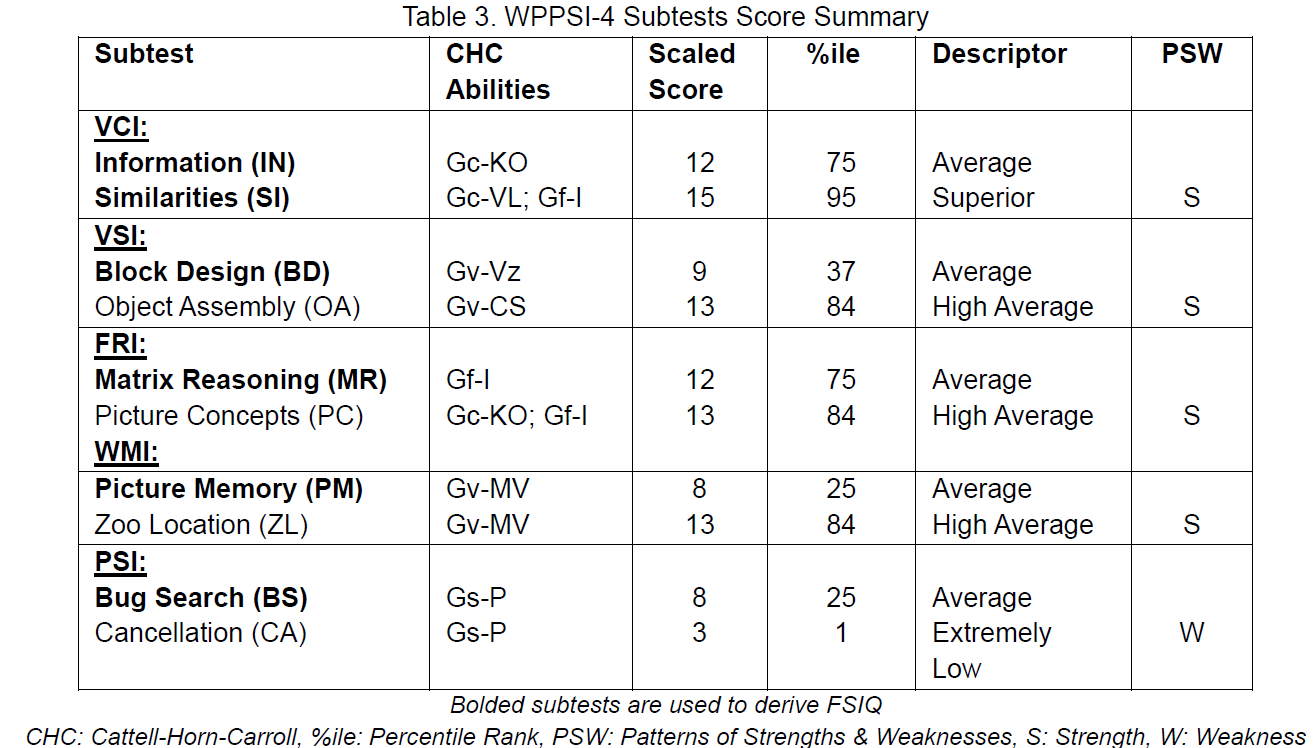
This article highlights a preschooler named GW, who struggles academically and has not responded well to previous intervention efforts due to cognitive weakness (weak cognitive processing). The authors performed a psychoeducational evaluation using Cognitive Hypothesis Testing Model from his previous assessment data (intellectual and academic) and then interpreted the results using the Cross-Battery Assessment approach. This approach allows the authors of this paper to measure a wider range of abilities that can only be represented by a single assessment battery by identifying GW’s patterns of strengths and weaknesses. Finally, targeted interventions are recommended based on the Cattell-Horn-Carroll (CHC) theory on human cognitive abilities to help GW cope with his academic weaknesses in school.
References
Fiorello, C. A., Hale, J. B., & Snyder, L. E. (2006). Cognitive hypothesis testing and response to intervention for children with reading problems. Psychology in the Schools, 43(8), 835-853. https://doi.org/10.1002/pits.20192 DOI: https://doi.org/10.1002/pits.20192
Fiorello, C. A., Hale, J. B., & Wycoff, K. L. (2012). Cognitive hypothesis testing: Linking test results to the realworld. In D. P. Flanagan & P. L. Harrison (Eds.), Contemporary intellectual assessment: Theories, tests, and issues (pp. 484–496). New York, NY: Guilford Press.
Fiorello, C. A., & Wycoff, K. L. (2018). Cognitive hypothesis testing: Linking test results to the real world. In D. P. Flanagan & E. M. McDonough (Eds.), Contemporary intellectual assessment: Theories, tests, and issues (pp. 715–730). New York, NY: Guilford Press.
Flanagan, D. P., & Kaufman, A. S. (2009). Essentials of WISC-IV assessment (2nd ed.). New York, NY: Wiley.
Flanagan, D. P., Fiorello, C. A., & Ortiz, S. O. (2010). Enhancing practice through application of Cattell-Horn-Carroll Theory and research: A "third method" approach to specific learning disability identification. Psychology in the Schools, 47(7), 739-760. https://doi.org/10.1002/pits.20501 DOI: https://doi.org/10.1002/pits.20501
Flanagan, D. P., Ortiz, S. O., & Alfonso, V. C. (2013). Essentials of cross-battery assessment (3rd ed.). NY: Wiley & Sons.
Hale, J. B., & Fiorello, C. A. (2004). School neuropsychology: A practitioner's handbook. New York, NY: Guilford Press.
Hale, J. B., Fiorello, C. A., Miller, J. A., Wenrich, K., Teodori, A., & Henzel, J. N. (2008). WISC-IV interpretation for specific learning disabilities identification and intervention: A cognitive hypothesis testing approach. In A. Prifitera, D. H. Saklofske, & L. G. Weiss (Eds.), WISC-IV clinical assessment and intervention (pp. 109–171). Cambridge, MA: Elsevier Academic Press.
Schneider, W. J., & McGrew, K. S. (2012). The Cattell-Horn-Carroll model of intelligence. In D. P. Flanagan &
P. L. Harrison (Eds.), Contemporary intellectual assessment: Theories, tests, and issues (3rd ed., pp. 99-144). New York, NY: Guilford Press.
Schneider, W. J., & McGrew, K. S. (2018). The Cattell-Horn-Carroll theory of cognitive abilities. In D. P. Flanagan & E. M. McDonough (Eds.), Contemporary intellectual assessment: Theories, tests, and issues (pp. 73-163). New York, NY: Guilford Press.
Weiss, L., Saklofske, D., Prifitera, A., & Holdnack, J. (2006). WISC–IV advanced clinical interpretation. San Diego, CA: Academic Press. DOI: https://doi.org/10.1016/B978-012088763-7/50005-X
Downloads
Published
How to Cite
Issue
Section
License
Copyright (c) 2025 The Asian Educational Therapist

This work is licensed under a Creative Commons Attribution 4.0 International License.