Psychoeducational Diagnostic Assessment, Evaluation & Profiling on Children for Educational Therapists: A Proposed Procedure
DOI:
https://doi.org/10.64663/aet.20Keywords:
Evaluation and Profiling, Educational Therapist, Psychoeducational Assessment, Special NeedsAbstract
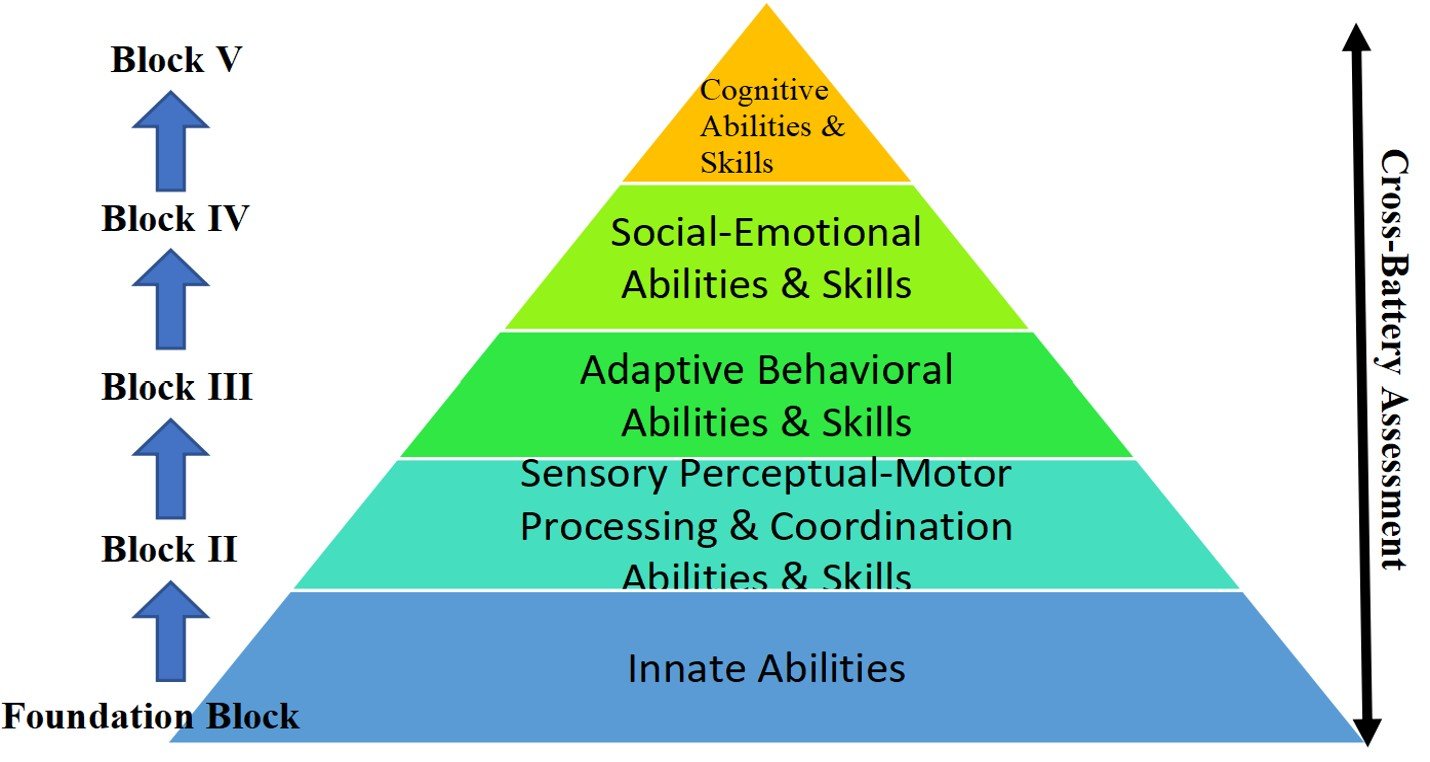
Children who struggle in learning or exhibiting behavioral problems are common in schools. Such struggles may occur early in a child’s development, and later manifested as difficulty coping in school such as difficulty in understanding directions, learning to read/write, completing tasks in the allotted time period, or planning/organizing tasks/materials. Despite the support provided from school, these struggles still persist which leave children, teachers, and parents feeling helpless and frustrated. A psychoeducational diagnostic assessment, evaluation and profiling (PDAEP) by a trained educational therapist can help to open door to identifying the child’s strengths and learning challenges. The authors of this article proposed a 10-steps procedure in PDAEP which begins with a comprehensive understanding of the client (background information, developmental history, medical history, etc.), administration of tests (based on Hierarchy of Abilities & Skills model), evaluation (based on Conative, Cognitive, Affect, Sensation model), analysis (based on Carttell-Horne-Carroll model), developing and implementing Individualized Education Program, progress monitoring, and finally progress evaluation and planning for the next IEP.
References
Alfonso, V. C., Flanagan, D. P., & Radwan, S. (2005). The impact of the Cattell-Horn-Carroll theory on test development and interpretation of cognitive and academic abilities. In D.P. Flanagan, & P.L. Harrison (Eds.), Contemporary intellectual assessment. Theories, tests, and issues (2nd ed., pp. 185- 202). NY: Guilford Publication. https://psycnet.apa.org/record/2005-09732-009
Bickman L., Kelley S. D., Breda, C., De Andrade A. R. V., & Riemer, M. (2011). Effects of routine feedback to clinicians on mental health outcomes of youths: Results of a randomized trial. Psychiatric Services, 62(12),1423–1429. https://doi.org/10.1176/appi.ps.002052011 DOI: https://doi.org/10.1176/appi.ps.002052011
Bloom, B. S. (1956). Taxonomy of educational objectives: The classification of educational goals. NY: Longmans, Green. https://publicservicesalliance.org/wp-content/uploads/2013/04/guildresearch_blooms2013.pdf
Chia, K. H. (2008). Educating the whole child in a child with special needs: What we know and understand and what we can do. ASCD Review, 14, 25-31.
Chia, K. H. (2013). A psychogogic perspective of lesson study for special education teachers. Academic Research International, 4(4), 334-346. http://www.savap.org.pk/journals/ARInt./Vol.4(4)/2013(4.4-36).pdf
Chia, K. H., & Chua, A. C. K. (2014, Spring). A brief examination of an autistic mind: From mindsight to mind blindness, from mindfulness to mindlessness. Unlimited Human! 4-7.
Chia, K. H., Kee, K. N., & Yusof, S. M. M. (2010). Identifying and profiling autistic learning and behavioral difficulties in children. In autism: Practical tips on teaching children with mild/moderate autism in mainstream schools (Paper 1). Singapore: Cobee Publishing House. https://www.cobee.com.sg/autism-paper-1-identifying-and-profiling-autistic-learning-n-behavioural-difficulties-in-children-aug2010
DuPaul, G. J., Power, T. J., Anastopoulos, A. D., & Reid, R. (1998). ADHD Rating Scale—IV: Checklists, norms, and clinical interpretation. Guilford Press. https://psycnet.apa.org/record/1998-06605-000 DOI: https://doi.org/10.1037/t00680-000
Ericsson, K., Hilleras, P., Holmen, K., & Winblad, B. (1996). Human-figure drawing (HFD) in the screening of cognitive impairment in old age. Journal of Medical Screening, 3, 105-109. https://doi.org/10.1177/096914139600300212 DOI: https://doi.org/10.1177/096914139600300212
Flanagan, D. P., Fiorello, C. A., & Ortiz, S. O. (2010). Enhancing practice through application of Cattell-Horn-Carroll Theory and research: A "third method" approach to specific learning disability identification. Psychology in the Schools, 47(7), 739-760. https://doi.org/10.1002/pits.20501 DOI: https://doi.org/10.1002/pits.20501
Gilliam, J.E. (2014). Gilliam Autism Rating Scale3rd Edition. Austin, TX: PRO-ED. https://doi.org/10.1177/0734282916635465 DOI: https://doi.org/10.1177/0734282916635465
Helmering, D. W. (2001). Sense ability: Expanding your sense of awareness for a twenty-first century life. New York, NY: HarperCollins. https://www.abebooks.com/signed-first-edition/Sense-Ability-Expanding-Awareness-Twenty-First-Century-Life/32252961728/bd
Horn, J. L., & Blankson, N. (2005). Foundations for Better Understanding of Cognitive Abilities. In D. P. Flanagan & P. L. Harrison (Eds.), Contemporary Intellectual Assessment: Theories, Tests, and Issues (pp. 41–68). The Guilford Press. https://psycnet.apa.org/record/2005-09732-003
Huitt, W., & Cain, S. (2005). An overview of the conative domain. Educational Psychology Interactive. Valdosta, GA: Valdosta State University. Retrieved [online] from http:/www.edpsycinteractive.org/brilstar/chapters/conative.pdf
IDEA, Individuals with Disabilities Education Improvement Act, P.L. 108-446 (2004).
Krathwohl, D. R., Bloom, B. S., and Masia, B. B. (1964). Taxonomy of educational objectives: Handbook II: Affective domain. New York, NY: David McKay Co. https://www.scirp.org/reference/referencespapers?referenceid=822257
Lambert, M. J., Whipple, J. L., Hawkins, E. J., Vermeersch, D. A., Nielsen, S. L., & Smart, D. W. (2003). Is It Time for Clinicians to Routinely Track Patient Outcome? A Meta-Analysis. Clinical Psychology: Science and Practice, 10(3), 288–301. https://doi.org/10.1093/clipsy.bpg025 DOI: https://doi.org/10.1093/clipsy.bpg025
McGrew, K. S. (2005). The Cattell-Horn-Carroll Theory of Cognitive Abilities: Past, present, and future. In D. P. Flanagan, & P. L. Harrison (Eds.), Contemporary intellectual assessment: theories, tests, and issues (2nd ed., pp. 136- 182). NY: Guilford Press. https://psycnet.apa.org/record/2005-09732-008
Neisser, U. (1967). Cognitive psychology. New York, NY: Appleton-Century-Crofts. https://www.scirp.org/reference/referencespapers?referenceid=445424
P. Flanagan & P. L. Harrison (Eds.), Contemporary intellectual assessment: Theories, tests, and issues (2nd ed., pp. 41-68). New York, NY: The Guilford Press. http://www.iapsych.com/cia3.pdf
Pangman, V. C., Sloan, J., & Guse, L. (2000). An examination of psychometric properties of the mini-mental state examination and the standardized mini-mental state examination: Implications for clinical practice. Applied Nursing Research, 13(4), 209-213. https://doi.org/10.1053/apnr.2000.9231 DOI: https://doi.org/10.1053/apnr.2000.9231
Patton, M. Q. (1999). Enhancing the quality and credibility of qualitative analysis. Health Sciences Research, 34, 1189–1208. https://pmc.ncbi.nlm.nih.gov/articles/PMC1089059/
Poland, R. G. (1974). Human experience: A psychology of growth. Saint Louis, CO: CV Mosby. https://cir.nii.ac.jp/crid/1971149384743172515/holdings
Poon, K. K., Conway, R., & Khaw, J. (2008). In K. K. Poon, J. Khaw, & J-Y., Li. (Eds). Supporting Students with Special Needs in Mainstream Schools. Singapore: Pearson Education (South Asia). https://books.google.com.sg/books/about/Supporting_Students_with_Special_Needs_i.html?id=EM0pOAAACAAJ
Reese. R.J., Norsworthy, L.A., & Rowlands, S.R. (2009). Does a continuous feedback system improve psychotherapy outcome? Psychotherapy: Theory, Research, Practice, Training, 46(4), 418-431. https://psycnet.apa.org/buy/2009-24214-002 DOI: https://doi.org/10.1037/a0017901
Reeves, T. C. (2006). How do you know they are learning? The importance of alignment in higher education. International Journal of Learning Technology, 2(4), 294- 308. https://doi.org/10.1504/IJLT.2006.011336 DOI: https://doi.org/10.1504/IJLT.2006.011336
Riggs, E. G., & Gholar, C. R. (2009). Strategies that promote student engagement: Unleashing the desire to learn (2nd ed). Thousand Oaks, CA: Corwin Press. https://www.amazon.com/Strategies-That-Promote-Student-Engagement/dp/B010TT05XS
Rosen, C., Miller, A.C., Pit-ten Cate, I. M., Bicchieri, S., Gordon, R.M., Daniele R. (1998). Team approaches to treating children with disabilities: a comparison. Archives of Physical Medicine and Rehabilitation, 79(4), 430-4. https://doi.org/10.1016/S0003-9993(98)90145-9 DOI: https://doi.org/10.1016/S0003-9993(98)90145-9
Salvia, J., & Ysseldyke, J. E. (2001). Assessment (8th ed.). Boston: Houghton Mifflin. https://www.amazon.com/Assessment-Eighth-John-Salvia/dp/0618042814
Schneider, W. J., & McGrew, K. S. (2012). The Cattell-Horn-Carroll model of intelligence. In D. P. Flanagan & P. L. Harrison (Eds.), Contemporary intellectual assessment: Theories, tests, and issues (3rd ed., pp. 99-144). NY: The Guilford Press. https://psycnet.apa.org/record/2012-09043-004
Schneider, W. J., & McGrew, K. S. (2018). The Cattell-Horn-Carroll theory of cognitive abilities. In D. P. Flanagan & E. M. McDonough (Eds.), Contemporary intellectual assessment: Theories, tests, and issues (pp. 73- 163). New York, NY: The Guilford Press. https://psycnet.apa.org/record/2018-36604-003
Seels, B. B., & Glasgow, Z. (1990). Excercises in instructional design. Colombus, OH: Merrill Publishing Co. https://www.scirp.org/reference/referencespapers?referenceid=2382129
Woodruff, G., & McGonigel, M.J. (1988). Early intervention team approaches: The transdisciplinary model. Reston, VA: Council for Exceptional Children & ERIC Clearinghouse on Handicapped and Gifted Children. https://eric.ed.gov/?id=ED302971
Downloads
Published
How to Cite
Issue
Section
License
Copyright (c) 2023 Chee Keong, Arnold CHUA, Harjit SINGH

This work is licensed under a Creative Commons Attribution 4.0 International License.