
Psychoeducational Evaluation and Profiling Using the Educational Therapy Framework: A Case Study
DOI:
https://doi.org/10.64663/aet.22Keywords:
Tourette Syndrome, Educational Therapy, Learning Disorder, Attention-deficit/hyperactivity disorder (ADHD)Abstract
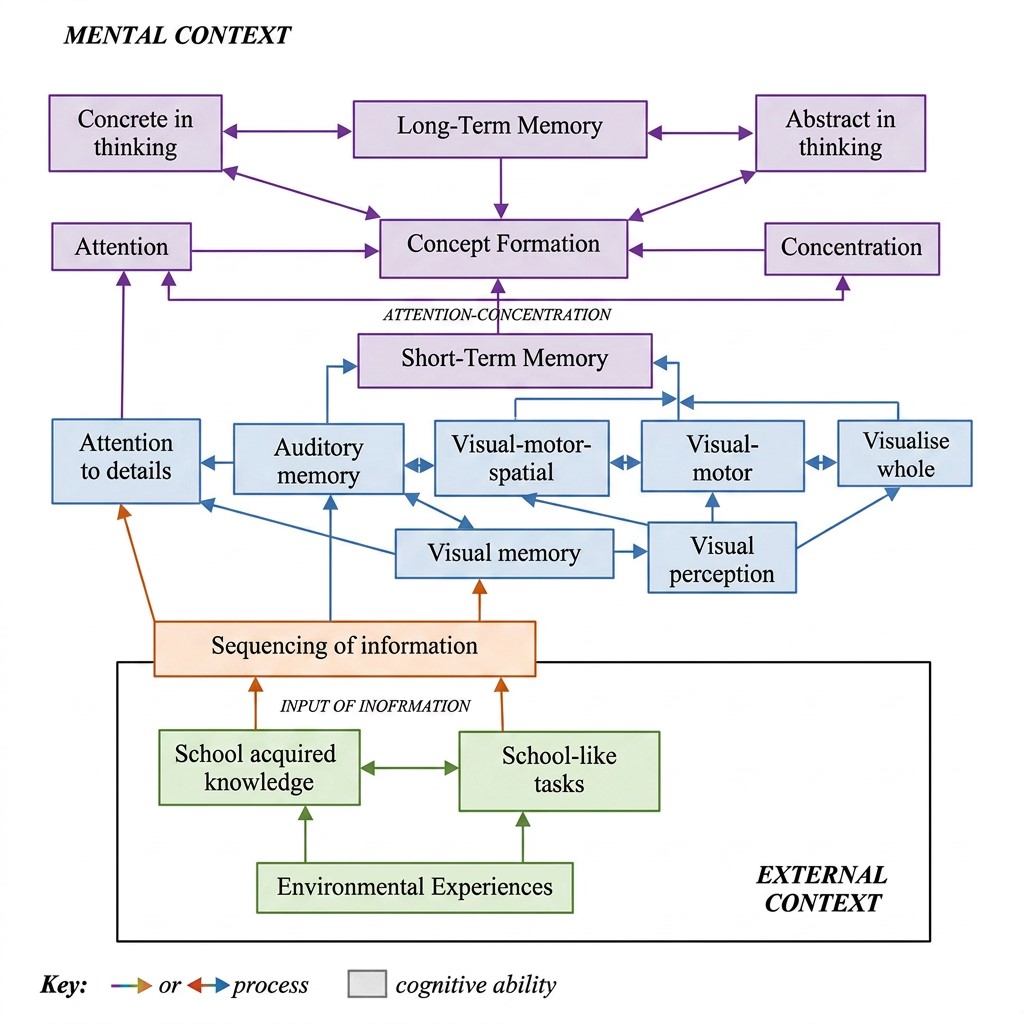
This case study presents a comprehensive psychoeducational evaluation of an eleven-year-old Chinese boy, referred to as LH, who has co-occurring Attention-Deficit/Hyperactivity Disorder (ADHD) and Tourette Syndrome. The evaluation was conducted using the Hierarchy Model within the Educational Therapy framework. Cognitive assessment with the Wechsler Intelligence Scale for Children (WISC) revealed that LH demonstrates strengths in visuospatial reasoning, concept formation, and factual knowledge. At the same time, he shows weaknesses in attention, sequential processing, short-term memory, abstract reasoning, and processing speed. WISC-derived profiles indicated potential learning difficulties, particularly in reading, arithmetic, and multi-step problem-solving. Socio-emotional assessment using the Strengths and Difficulties Questionnaire for Children indicated that LH experiences significant difficulties in peer relationships. He shows limited social motivation and faces challenges in establishing and maintaining stable interactions. These social vulnerabilities can be understood in the context of LH’s cognitive and neurodevelopmental profile. Attention deficits, executive function weaknesses, and the presence of tics contribute to social challenges and may increase the risk of peer isolation. In summary, this case study demonstrates how the Hierarchy Model within the Educational Therapy framework can systematically integrate multi-domain assessment data to generate a comprehensive psycho-educational profile. Unlike conventional approaches that focus on isolated cognitive scores or single-domain academic outcomes, this model offers a holistic understanding of children’s challenges, the underlying processes contributing to them, and potential avenues for individualized intervention planning.
References
Association of Educational Therapists. (2023). AET fact sheet: What is educational therapy? https://www.aetonline.org/about/fact-sheet
American Psychiatric Association. (2013). Diagnostic and statistical manual of mental disorders (5th ed.). American Psychiatric Publishing. https://psychiatryonline.org/doi/book/10.1176/appi.books.9780890425596 DOI: https://doi.org/10.1176/appi.books.9780890425596
Bailey, K. M., & Im-Bolter, N. (2025). Social cognitive processes in children with specific learning disorder: The importance of language. Learning Disability Quarterly, 48(4), 215-226. https://doi.org/10.1177/07319487241288531 DOI: https://doi.org/10.1177/07319487241288531
Bannatyne, A. (1968). Diagnosis: A note on recategorization of the WISC scaled scores. Journal of Learning Disabilities, 1(7), 272–274. https://doi.org/10.1177/002221946800100703 DOI: https://doi.org/10.1177/002221946800100703
Bannatyne, A. (1971). Language, reading, and learning disabilities. Charles C Thomas. https://archive.org/details/languagereadingu0000unse
Bannatyne, A. (1974). Diagnosis: A note on recategorization of the WISC scaled scores (Reprint). Charles C Thomas.
Bellaert, N., Morreale, K., & Tseng, W. L. (2024). Peer functioning difficulties may exacerbate symptoms of attention‐deficit/hyperactivity disorder and irritability over time: a temporal network analysis. Journal of Child Psychology and Psychiatry, 65(6), 809-821. https://doi.org/10.1111/jcpp.13911 DOI: https://doi.org/10.1111/jcpp.13911
Bitsko, R. H., Danielson, M. L., Leeb, R. T., Bergland, B., Fuoco, M. J., Ghandour, R. M., & Lewin, A. B. (2020). Indicators of social competence and social participation among US children with Tourette syndrome. Journal of child neurology, 35(9), 612-620. https://doi.org/10.1177/0883073820924257 DOI: https://doi.org/10.1177/0883073820924257
Boz, S. (2024). Enhancing arithmetic skills through working memory: A review of interventions and strategies. Journal of Mathematics and Science Teacher, 4(3). em067. https://doi.org/10.29333/mathsciteacher/14632 DOI: https://doi.org/10.29333/mathsciteacher/14632
Channon, S., Pratt, P., & Robertson, M. M. (2003). Executive function, memory, and learning in Tourette's syndrome. Neuropsychology, 17(2), 247–254. https://doi.org/10.1037/0894-4105.17.2.247 DOI: https://doi.org/10.1037/0894-4105.17.2.247
Charania, S. N., Danielson, M. L., Claussen, A. H., Lebrun-Harris, L. A., Kaminski, J. W., & Bitsko, R. H. (2022). Bullying Victimization and Perpetration Among US Children with and Without Tourette Syndrome. Journal of developmental and behavioral pediatrics: JDBP, 43(1), 23–31. https://doi.org/10.1097/DBP.0000000000000975 DOI: https://doi.org/10.1097/DBP.0000000000000975
Chia, N. K. H., & Wong, M. E. (2014). From Mental Retardation to Intellectual Disability: A Proposed Educological Framework for Teaching Students with Intellectual Disabilities in Singapore. Academic Research International, 5(3), 147–163. http://www.savap.org.pk/journals/ARInt./Vol.5(3)/2014(5.3-17).pdf
Chia, K. H., & Wong, M. E. (2010). Psychoeducational diagnostic evaluation & profiling: A workbook for mainstream, allied & special educators. Pearson Education. https://www.cobee.com.sg/psycho-educational-diagnostic-evaluation-n-profiling-a-workbook-for-mainstream-allied-n-special-educators-wcd-and-chart-left-1-copy
Dan, L., Yu, J., Vandenberg, S. G., Yuemei, Z., & Caihong, T. (1990). Report on Shanghai norms for the Chinese translation of the Wechsler Intelligence Scale for Children—Revised. Psychological Reports, 67(2), 531–541. https://doi.org/10.2466/pr0.1990.67.2.531 DOI: https://doi.org/10.2466/pr0.1990.67.2.531
Gaye, F., Groves, N. B., Chan, E. S. M., Cole, A. M., Jaisle, E. M., Soto, E. F., & Kofler, M. J. (2024). Working memory and math skills in children with and without ADHD. Neuropsychology, 38(1), 1–16. https://doi.org/10.1037/neu0000920 DOI: https://doi.org/10.1037/neu0000920
Goodman, R. (1997). The Strengths and Difficulties Questionnaire: A research note. Journal of Child Psychology and Psychiatry, 38(5), 581–586. https://doi.org/10.1111/j.1469-7610.1997.tb01545.x DOI: https://doi.org/10.1111/j.1469-7610.1997.tb01545.x
DuPaul, G. J., Power, T. J., Anastopoulos, A. D., & Reid, R. (2016). ADHD Rating Scale–5 for children and adolescents: Checklists, norms, and clinical interpretation. Guilford Press. https://doi.org/10.1037/t50305-000 DOI: https://doi.org/10.1037/t05638-000
Dunn, W. (2014). Sensory profile 2: User’s manual. Pearson. https://doi.org/10.1037/t57492-000
Eapen, V., Cavanna, A. E., & Robertson, M. M. (2016). Comorbidities, social impact and quality of life in Tourette syndrome. Frontiers in Psychiatry, 7, Article 97. https://doi.org/10.3389/fpsyt.2016.00097 DOI: https://doi.org/10.3389/fpsyt.2016.00097
Fox, A., Dishman, S., Valicek, M., Ratcliff, K., & Hilton, C. (2020). Effectiveness of Social Skills Interventions Incorporating Peer Interactions for Children With Attention Deficit Hyperactivity Disorder: A Systematic Review. The American journal of occupational therapy, 74(2), 7402180070p1–7402180070p19. https://doi.org/10.5014/ajot.2020.040212 DOI: https://doi.org/10.5014/ajot.2020.040212
Gilliam, J. E. (2014). Gilliam Autism Rating Scale–Third Edition (GARS-3). Pro-Ed. https://doi.org/10.1037/t49938-000
Görker, I. (2019). The prevalence and gender differences in specific learning disorder. In S. Misciagna (Ed.), Learning disabilities —— neurological bases, clinical features and strategies of intervention. IntechOpen. https://doi.org/10.5772/intechopen.90214 DOI: https://doi.org/10.5772/intechopen.90214
Hirschtritt, M. E., Lee, P. C., Pauls, D. L., Dion, Y., Grados, M. A., Illmann, C., King, R. A., Sandor, P., McMahon, W. M., Lyon, G. J., Cath, D. C., Scharf, J. M., Mathews, C. A., & Tourette Syndrome Association International Consortium for Genetics. (2015). Lifetime prevalence, age of risk, and genetic relationships of comorbid psychiatric disorders in Tourette syndrome. JAMA Psychiatry, 72(4), 325–333. https://doi.org/10.1001/jamapsychiatry.2014.2650 DOI: https://doi.org/10.1001/jamapsychiatry.2014.2650
Huckeba, W., Chapieski, L., Hiscock, M., & Glaze, D. (2008). Arithmetic performance in children with Tourette syndrome: relative contribution of cognitive and attentional factors. Journal of clinical and experimental neuropsychology, 30(4), 410–420. https://doi.org/10.1080/13803390701494970 DOI: https://doi.org/10.1080/13803390701494970
Huang, Y. H., Chung, C. Y., Ou, H. Y., Tzang, R. F., Huang, K. Y., Liu, H. C., ... & Liu, S. I. (2015). Treatment effects of combining social skill training and parent training in Taiwanese children with attention deficit hyperactivity disorder. Journal of the Formosan Medical Association, 114(3), 260-267. https://doi.org/10.1016/j.jfma.2012.10.019 DOI: https://doi.org/10.1016/j.jfma.2012.10.019
Khodeir, M. S., El-Sady, S. R., & Mohammed, H. A. E. R. (2020). The prevalence of psychiatric comorbid disorders among children with specific learning disorders: A systematic review. The Egyptian Journal of Otolaryngology, 36(1), 57. https://doi.org/10.1186/s43163-020-00054-w DOI: https://doi.org/10.1186/s43163-020-00054-w
Lan, Y. T., Liu, X. P., & Fang, H. S. (2020). Randomized control study of the effects of executive function training on peer difficulties of children with attention-deficit/hyperactivity disorder C subtype. Applied neuropsychology: Child, 9(1), 41–55. https://doi.org/10.1080/21622965.2018.1509003 DOI: https://doi.org/10.1080/21622965.2018.1509003
Lau, C. R. L., & Xie, G. (2020). A case study of a child with attention deficit/hyperactivity disorder (ADHD) and mathematics learning difficulty (MLD). European Journal of Special Education Research, 5(4). https://doi.org/10.5281/zenodo.3732793
Lee, M. M., Drury, B. C., McGrath, L. M., & Stoodley, C. J. (2023). Shared grey matter correlates of reading and attention. Brain and Language, 237, Article 105230. https://doi.org/10.1016/j.bandl.2023.105230 DOI: https://doi.org/10.1016/j.bandl.2023.105230
Ludlow, A.K., Anderson, S., Hedderly, T. et al. The relationship between anxiety and tic severity in children and adolescents with Tic disorders: a scoping review. Curr Psychol 43, 21808–21829 (2024). https://doi.org/10.1007/s12144-024-05975-w DOI: https://doi.org/10.1007/s12144-024-05975-w
Machover, K. (1949). Personality projection in the drawing of the human figure: A method of personality investigation. Charles C. Thomas. DOI: https://doi.org/10.1037/11147-000
McGrath, L. M., & Stoodley, C. J. (2019). Are there shared neural correlates between dyslexia and ADHD? Journal of Neurodevelopmental Disorders, 11, 28. https://doi.org/10.1186/s11689-019-9287-8 DOI: https://doi.org/10.1186/s11689-019-9287-8
Mikami, A. Y., Griggs, M. S., Lerner, M. D., Emeh, C. C., Reuland, M. M., Jack, A., & Anthony, M. R. (2013). A randomized trial of a classroom intervention to increase peers' social inclusion of children with attention-deficit/hyperactivity disorder. Journal of Consulting and Clinical Psychology, 81(1), 100–112. https://doi.org/10.1037/a0029654 DOI: https://doi.org/10.1037/a0029654
Murray, H. A. (1943). Thematic Apperception Test manual. Harvard University Press.
Nelson, J. M., & Harwood, H. (2011). Learning disabilities and anxiety: A meta-analysis. Journal of Learning Disabilities, 44(1), 3–17. https://doi.org/10.1177/0022219409359939 DOI: https://doi.org/10.1177/0022219409359939
Owens, M., Stevenson, J., Hadwin, J. A., & Norgate, R. (2012). Anxiety and depression in academic performance: An exploration of the mediating factors of worry and working memory. School Psychology International, 33(4), 433–449. https://doi.org/10.1177/0143034311427433 DOI: https://doi.org/10.1177/0143034311427433
Pearson Assessments. (2016). Adaptive Behavior Diagnostic Scale (ABDS). Pearson. https://doi.org/10.1037/t60397-000 DOI: https://doi.org/10.1037/t60397-000
Pennington, B. F. (2006). From single to multiple deficit models of developmental disorders. Cognition, 101(2), 385–413. https://doi.org/10.1016/j.cognition.2006.04.008 DOI: https://doi.org/10.1016/j.cognition.2006.04.008
Peterson, R. L., & Pennington, B. F. (2015). Developmental dyslexia. Annual review of clinical psychology, 11(1), 283-307. https://doi.org/10.1146/annurev-clinpsy-032814-112842 DOI: https://doi.org/10.1146/annurev-clinpsy-032814-112842
Ros, R., & Graziano, P. A. (2018). Social functioning in children with or at risk for attention deficit/hyperactivity disorder: A meta-analytic review. Journal of Clinical Child & Adolescent Psychology, 47(2), 213-235. https://doi.org/10.1080/15374416.2016.1266644 DOI: https://doi.org/10.1080/15374416.2016.1266644
Van Stralen, J. (2016). Emotional dysregulation in children with attention-deficit/hyperactivity disorder. ADHD Attention Deficit and Hyperactivity Disorders, 8(4), 175-187. https://doi.org/10.1007/s12402-016-0199-0 DOI: https://doi.org/10.1007/s12402-016-0199-0
Visser, L., Kalmar, L., Linkersdörfer, J., Görgen, R., Rothe, J., Hasselhorn, M., & Schulte-Körne, G. (2020). Comorbidities between specific learning disorders and psychopathology in elementary school children in Germany. Frontiers in Psychiatry, 11, Article 292. https://doi.org/10.3389/fpsyt.2020.00292 DOI: https://doi.org/10.3389/fpsyt.2020.00292
Watkins, M. W. (1996). Diagnostic utility of the WISC-III developmental index as a predictor of learning disabilities. Journal of Learning Disabilities, 29(3), 305-312. https://psycnet.apa.org/record/1996-01617-009 DOI: https://doi.org/10.1177/002221949602900309
Watson, K. H., Eckland, M., Schwartzman, J. M., Molnar, A., Boon, W., Hiller, M., ... & Isaacs, D. A. (2024). The association of quality of life with psychosocial factors in adolescents with Tourette syndrome. Child Psychiatry & Human Development, 1-12. https://doi.org/10.1007/s10578-023-01656-0 DOI: https://doi.org/10.1007/s10578-023-01656-0
Wechsler, D. (1974). Manual for the Wechsler Intelligence Scale for Children–Revised. Psychological Corporation. https://www.scirp.org/reference/referencespapers?referenceid=1219139
Wechsler, D. (2014). Wechsler Intelligence Scale for Children–Fifth Edition (WISC–V). Pearson. https://doi.org/10.1037/t49755-000 DOI: https://doi.org/10.1037/t79359-000
Downloads
Published
How to Cite
Issue
Section
License
Copyright (c) 2025 Zining Ding

This work is licensed under a Creative Commons Attribution 4.0 International License.