
Is Hikikomori Syndrome a ‘Modern-day Depression’? A Nosological Perspective
DOI:
https://doi.org/10.64663/aet.24Keywords:
Hikikomori, Social Withdrawal, Depression, Anxiety, NosologyAbstract
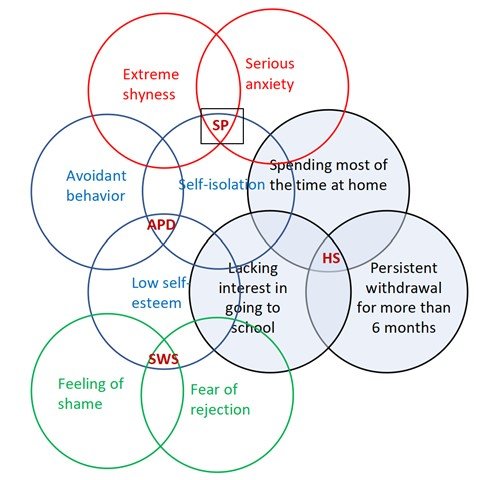
This short paper is the author’s attempt to provide an investigative examination of a severe disorder of socially avoidant behavior observed over a period of at least six months or more. Known as Hikikomori Syndrome, the condition can cause serious distress and dysfunction to the sufferer and the explicit behavioral traits include the refusal to leave home or go outside, to go to school (if the sufferer is still studying) or to work (if s/he is a working adult), and withdrawal from peers as well as close family members leading to social isolation and limited social communication with others. However, Hikikomori Syndrome appears to be a biosocio-psychological disorder that overlaps and is co-morbid with other psychiatric disorders, particularly depression and generalized anxiety disorder. It is vital to examine the underlying conceptualization and consider if Hikikomori Syndrome is indeed a form of modern-day depression.
References
American Psychiatric Association, D., & American Psychiatric Association. (2013). Diagnostic and statistical manual of mental disorders: DSM-5. Washington, DC: The Author. https://psycnet.apa.org/doi/10.1176/appi.books.9780890425596 DOI: https://doi.org/10.1176/appi.books.9780890425596
Auerbach, R. P., Mortier, P., Bruffaerts, R., Alonso, J., Benjet, C., Cuijpers, P., ... & Kessler, R. C. (2018). WHO world mental health surveys international college student project: prevalence and distribution of mental disorders. Journal of abnormal psychology, 127(7), 623-638. https://doi.org/10.1037/abn0000362 DOI: https://doi.org/10.1037/abn0000362
Benjet, C., Mortier, P., Kiekens, G., Ebert, D. D., Auerbach, R. P., Kessler, R. C., … & Bruffaerts, R. (2022). A risk algorithm that predicts alcohol use disorders among college students. European Child & Adolescent Psychiatry, 31(7), 1-11. https://doi.org/10.1007/s00787-020-01712-3 DOI: https://doi.org/10.1007/s00787-020-01712-3
Bruffaerts, R., Mortier, P., Kiekens, G., Auerbach, R. P., Cuijpers, P., Demyttenaere, K., … & Kessler, R. C. (2018). Mental health problems in college freshmen: Prevalence and academic functioning. Journal of Affective Disorders, 225, 97-103. https://doi.org/10.1016/j.jad.2017.07.044 DOI: https://doi.org/10.1016/j.jad.2017.07.044
Borovoy, A. (2008). Japan's hidden youths: mainstreaming the emotionally distressed in Japan. Culture, Medicine and Psychiatry, 32(4), 552-576. https://doi.org/10.1007/s11013-008-9106-2 DOI: https://doi.org/10.1007/s11013-008-9106-2
Bynner, J., & Parsons, S. (2002). Social exclusion and the transition from school to work: The case of young people not in education, employment, or training (NEET). Journal of Vocational Behavior, 60(2), 289–309. https://doi.org/10.1006/jvbe.2001.1868 DOI: https://doi.org/10.1006/jvbe.2001.1868
Chong, S. S. C., & Chan, K. M. (2012). A case study of a Chinese ‘Hikikomorian’in Canada–theorizing the process of Hikikomorization. Journal of Special Education and Rehabilitation, 13(3-4), 99-114. http://jser.fzf.ukim.edu.mk/files/99-114%20Chong(1).pdf DOI: https://doi.org/10.2478/v10215-011-0028-0
Clauss, J. A., & Blackford, J. U. (2012). Behavioral inhibition and risk for developing social anxiety disorder: A meta-analytic study. Journal of the American Academy of Child and Adolescent Psychiatry, 51, 1066–1075. https://doi.org/10.1016/j.jaac.2012.08.002 DOI: https://doi.org/10.1016/j.jaac.2012.08.002
Coluccia, A., Fagiolini, A., Ferretti, F., Pozza, A., & Goracci, A. (2015). Obsessive-Compulsive Disorder and quality of life outcomes: protocol for a systematic review and meta-analysis of cross-sectional case-control studies. Epidemiology, Biostatistics and Public Health, 12(2). Article ID: e11037-1. https://doi.org/10.2427/11037 DOI: https://doi.org/10.2427/11037
Erikson, E. H. (1950). Childhood and society. New York, NY: W. W. Norton & Company.
Flesch, B. D., Houvèssou, G. M., Munhoz, T. N., & Fassa, A. G. (2020). Major depressive episode among university students in Southern Brazil. Revista de Saúde Pública, 54. https://doi.org/10.11606/s1518-8787.2020054001540 DOI: https://doi.org/10.11606/s1518-8787.2020054001540
Frankova, I. (2019). Similar but different: psychological and psychopathological features of primary and secondary hikikomori. Frontiers in Psychiatry, 10. Article ID: 558. https://doi.org/10.3389/fpsyt.2019.00558 DOI: https://doi.org/10.3389/fpsyt.2019.00558
Furlong, A. (2008) The Japanese Hikikomori Phenomenon: Acute Social Withdrawal among Young People. Sociological Review, 56, 309-325. https://doi.org/10.1111/j.1467-954X.2008.00790.x DOI: https://doi.org/10.1111/j.1467-954X.2008.00790.x
Garber, J., Gallerani, C. M., & Frankel, S. A. (2009). Depression in children. In I. H. Gotlib & C. L. Hammen (Eds.), Handbook of depression (pp. 405–443). New York, NY: Guilford Press.
Goldman-Mellor, S. J., Caspi, A., Harrington, H., Hogan, S., Nada-Raja, S., Poulton, R., & Moffitt, T. E. (2014). Suicide attempt in young people: A signal for long-term health care and social needs. JAMA Psychiatry, 71(2), 119–127. https://doi.org/10.1001/jamapsychiatry.2013.2803 DOI: https://doi.org/10.1001/jamapsychiatry.2013.2803
Guo, Z. (2022, January). A Review of Social and Cultural Causes of Hikikomori: Collectivism in Japan. In 2021 International Conference on Public Art and Human Development (ICPAHD 2021) (pp. 727-731). Linwood, NJ: Atlantis Press. https://doi.org/10.2991/assehr.k.220110.139 DOI: https://doi.org/10.2991/assehr.k.220110.139
Hamasaki, Y., Pionnié-Dax, N., Dorard, G., Tajan, N., & Hikida, T. (2022). Preliminary study of the social withdrawal (Hikikomori) spectrum in French adolescents: focusing on the differences in pathology and related factors compared with Japanese adolescents. BMC Psychiatry, 22. Article ID: 477. https://doi.org/10.1186/s12888-022-04116-6 DOI: https://doi.org/10.1186/s12888-022-04116-6
Hattori, Y. (2006) Social withdrawal in Japanese youth: A case study of thirty-five Hikikomori clients. Journal of Trauma Practice, 4, 181-201. https://doi.org/10.1300/J189v04n03_01 DOI: https://doi.org/10.1300/J189v04n03_01
Jablensky, A., & Kendell, R. E. (2002). Criteria for assessing a classification in psychiatry. In M. Maj, W. Gaebel,, J. J. Lopez-Ibor, & N. Sartorius (eds.), Psychiatric diagnosis and classification (pp. 1-34). Chichester, UK: John Wiley & Sons. https://doi.org/10.1002/047084647X.ch1 DOI: https://doi.org/10.1002/047084647X.ch1
Jane Costello, E., Erkanli, A., & Angold, A. (2006). Is there an epidemic of child or adolescent depression? Journal of Child Psychology and Psychiatry, 47(12), 1263-1271. https://doi.org/10.1111/j.1469-7610.2006.01682.x DOI: https://doi.org/10.1111/j.1469-7610.2006.01682.x
Jones, M. (2006, January 15). Shutting themselves in. In The New York Times Magazine. Retrieved from: https://www.nytimes.com/2006/01/15/magazine/shutting-themselves-in.html .
Kato, T. A., Kanba, S., & Teo, A. R. (2016). A 39-year-old 'adultolescent': Understanding social withdrawal in Japan. The American Journal of Psychiatry, 173, 112-114. https://doi.org/10.1176/appi.ajp.2015.15081034 DOI: https://doi.org/10.1176/appi.ajp.2015.15081034
Kato, T. A., Tateno, M., Shinfuku, N., Fujisawa, D., Teo, A. R., Sartorius, N., … & Kanba, S. (2012). Does the 'Hikikomori' syndrome of social withdrawal exist outside Japan? A preliminary international investigation. Social Psychiatry and Psychiatric Epidemiology, 47(7), 1061-1075. https://doi.org/10.1007/s00127-011-0411-7 DOI: https://doi.org/10.1007/s00127-011-0411-7
Kato, T. A., Shinfuku, N., Fujisawa, D., Tateno, M., Ishida, T., Akiyama, T., … Kanba, S. (2011). Introducing the concept of modern depression in Japan; an international case vignette survey. Journal of Affective Disorders, 135(1-3), 66-76. https://doi.org/10.1016/j.jad.2011.06.030 DOI: https://doi.org/10.1016/j.jad.2011.06.030
Kato, T. A., Kanba, S. & Teo, A. R. (2018). Hikikomori: Experience in Japan and International Relevance. World Psychiatry, 17, 105-106. https://doi.org/10.1002/wps.20497 DOI: https://doi.org/10.1002/wps.20497
Kato, T. A., Kanba, S., & Teo, A. R. (2019). Hikikomori: Multidimensional understanding, assessment, and future international perspectives. Psychiatry and clinical neurosciences, 73(8), 427-440. https://doi.org/10.1111/pcn.12895 DOI: https://doi.org/10.1111/pcn.12895
Kato, T. A., Shinfuku, N., & Tateno, M. (2020). Internet society, internet addiction, and pathological social withdrawal: the chicken and egg dilemma for internet addiction and hikikomori. Current Opinion in Psychiatry, 33(3), 264-270. https://doi.org/10.1097/YCO.0000000000000601 DOI: https://doi.org/10.1097/YCO.0000000000000601
Katsuki, R., Tateno, M., Kubo, H., Kurahara, K., Hayakawa, K., Kuwano, N., … & Kato, T. A. (2020). Autism spectrum conditions in Hikikomori: A pilot case-control study. Psychiatry and Clinical Neurosciences, 74(12), 652-658. https://doi.org/10.1111/pcn.13154 DOI: https://doi.org/10.1111/pcn.13154
Kerr, D. C., & Capaldi, D. M. (2011). Young men's intimate partner violence and relationship functioning: long-term outcomes associated with suicide attempt and aggression in adolescence. Psychological Medicine, 41(4), 759-769. https://doi.org/10.1017/S0033291710001182 DOI: https://doi.org/10.1017/S0033291710001182
Krieg A and Dickie JR (2013) Attachment and Hikikomori: A psychosocial developmental model. International Journal of Social Psychiatry, 59, 61-72. https://doi.org/10.1177/0020764011423182 DOI: https://doi.org/10.1177/0020764011423182
Kondo, N., Sakai, M., Kuroda, Y., Kiyota, Y., Kitabata, Y., & Kurosawa, M. (2013) General Condition of Hikikomori (Prolonged Social Withdrawal) in Japan: Psychiatric Diagnosis and Outcome in Mental Health Welfare Centres. International Journal of Social Psychiatry, 59, 79-86. https://doi.org/10.1177/0020764011423611 DOI: https://doi.org/10.1177/0020764011423611
Lee, Y.S., Lee, J.Y., Choi, T.Y. and Choi, J.T. (2013) Home Visitation Program for Detecting, Evaluating and Treating Socially Withdrawn Youth in Korea. Psychiatry and Clinical Neurosciences, 67, 193-202. https://doi.org/10.1111/pcn.12043 DOI: https://doi.org/10.1111/pcn.12043
Li, T. M., & Wong, P. W. (2015). Youth social withdrawal behavior (Hikikomori): a systematic review of qualitative and quantitative studies. Australian & New Zealand Journal of Psychiatry, 49(7), 595-609. https://doi.org/10.1177/0004867415581179 DOI: https://doi.org/10.1177/0004867415581179
Lin P, Andrew , Koh A & Liew K (2022). The relationship between Hikikomori risk factors and social withdrawal tendencies among emerging adults: An exploratory study of Hikikomori in Singapore. Frontiers in Psychiatry, 13. Article ID: 1065304. https://doi.org/10.3389/fpsyt.2022.1065304 DOI: https://doi.org/10.3389/fpsyt.2022.1065304
Malagón-Amor, Á., Córcoles-Martínez, D., Martín-López, L. M., & Pérez-Solà, V. (2015). Hikikomori in Spain: A descriptive study. International Journal of Social Psychiatry, 61(5), 475-483. https://doi.org/10.1177/0020764014553003 DOI: https://doi.org/10.1177/0020764014553003
Muris, P., & Ollendick, T.H. (2023). Contemporary hermits: A developmental psychopathology account of extreme social withdrawal (Hikikomori) in young people. Clinical Child and Family Psychology Review, 26, 459-481. https://doi.org/10.1007/s10567-023-00425-8 DOI: https://doi.org/10.1007/s10567-023-00425-8
Nakagami, Y., Li, T., Russ, T.C., Marques, J.G., Riese, F., Sönmez, E., … & Akiyama, T. (2017). Taijin kyofusho: A culture‐bound diagnosis discussed by Japanese and international early career psychiatrists. Psychiatry and Clinical Neurosciences, 71(2), 146-149. https://doi.org/10.1111/pcn.12482 DOI: https://doi.org/10.1111/pcn.12482
Niederkrotenthaler, T., Wang, M., Helgesson, M., Wilcox, H., Gould, M., & Mittendorfer-Rutz, E. (2017). Labour market marginalisation subsequent to suicide attempt in young migrants and native Swedes. Social psychiatry and psychiatric epidemiology, 52(5), 549-558. https://doi.org/10.1007/s00127-017-1344-6 DOI: https://doi.org/10.1007/s00127-017-1344-6
NHK World–Japan (2019). Japan's Hikikomori is growing older. Tokyo, Japan: NHK World–Japan.
Nonaka, S., & Sakai, M. (2021). Psychological factors associated with social withdrawal (Hikikomori). Psychiatry Investigation, 18(5), 463-470. https://doi.org/10.30773/pi.2021.0050 DOI: https://doi.org/10.30773/pi.2021.0050
Norasakkunkit, V., & Uchida, Y. (2014). To conform or to maintain self-consistency? Hikikomori risk in Japan and the deviation from seeking harmony. Journal of Social and Clinical Psychology, 33, 918-935. https://doi.org/10.1521/jscp.2014.33.10.918 DOI: https://doi.org/10.1521/jscp.2014.33.10.918
Niederkrotenthaler, T., Tinghög, P., Goldman-Mellor, S., Wilcox, H. C., Gould, M., & Mittendorfer-Rutz, E. (2016). Medical and social determinants of subsequent labour market marginalization in young hospitalized suicide attempters. PloS One, 11(1), Article ID: e0146130. https://doi.org/10.1371/journal.pone.0146130 DOI: https://doi.org/10.1371/journal.pone.0146130
Orsolini, L., Bellagamba, S., Volpe, U., Kato, T. A. (2022). Hikikomori and modern-type depression in Italy: A new phenotypical trans-cultural characterization? International Journal of Social Psychiatry, 68(5), 1010-1017. https://doi.org/10.1177/00207640221099408 DOI: https://doi.org/10.1177/00207640221099408
Pozza, A., Coluccia, A., Kato, T., Gaetani, M., & Ferretti, F. (2019). The Hikikomori' syndrome: Worldwide prevalence and co-occurring major psychiatric disorders: A systematic review and meta-analysis protocol. BMJ Open, 9(9). Article ID: e025213. https://doi.org/10.1136/bmjopen-2018-025213 DOI: https://doi.org/10.1136/bmjopen-2018-025213
Saito, T. (2013) Hikikomori: Adolescence without end. (translated by J. Angles). Minneapolis, MN: University of Minnesota Press.
Silić, A., Vukojević, J., Čulo, I., & Falak, H. (2019). Hikikomori silent epidemic: a case study. Research in Psychotherapy: Psychopathology, Process and Outcome, 22(2), 317-322. https://doi.org/10.4081/ripppo.2019.377 DOI: https://doi.org/10.4081/ripppo.2019.377
Staff, J. (2013). Coming of age in America: The transition to adulthood in the twenty-first century. Contemporary Sociology: A Journal of Reviews, 42, 117-118. https://doi.org/10.1177/0094306112468721hh DOI: https://doi.org/10.1177/0094306112468721hh
Stip, E., Thibault, A., Beauchamp-Chatel, A., & Kisely, S. (2016). Internet Addiction, Hikikomori Syndrome, and the Prodromal Phase of Psychosis. Frontiers in Psychiatry, 7. Article ID: 6. https://doi.org/10.3389/fpsyt.2016.00006 DOI: https://doi.org/10.3389/fpsyt.2016.00006
Suwa, M., & Suzuki, K. (2013). The phenomenon of “Hikikomori”(social withdrawal) and the socio-cultural situation in Japan today. Journal of Psychopathology, 19, 191-198. https://old.jpsychopathol.it/article/the-phenomenon-of-hikikomori-social-withdrawal-and-the-socio-cultural-situation-in-japan-today/
Tajan, N. (2015). Social withdrawal and psychiatry: A comprehensive review of Hikikomori. Neuropsychiatrie de l'Enfance et de l'Adolescence, 63(5), 324-331. https://doi.org/10.1016/j.neurenf.2015.03.008 DOI: https://doi.org/10.1016/j.neurenf.2015.03.008
Tamaki, S., & Angles, J. T. (2013). Hikikomori: Adolescence without end. Minneapolis, MN: University of Minnesota Press. https://psycnet.apa.org/record/2013-11204-000
Tateno, M., Park, T.W., Kato, T.A., Umene-Nakano, W. and Saito, T. (2012) Hikikomori as a Possible Clinical Term in Psychiatry: A Questionnaire Survey. BMC Psychiatry, 12, 1-7. https://doi.org/10.1186/1471-244x-12-169 DOI: https://doi.org/10.1186/1471-244X-12-169
Tarumi, S. (2005). The ‘new’ variant of depression: The dysthymic type (in Japanese). Japanese Journal of Clinical Psychiatry, 34, 687. https://cir.nii.ac.jp/crid/1370848662494257666
Tarumi, S., & Kanba, S. (2005). Sociocultural approach toward depression-dysthymic type depression. Japanese Bulletin of Social Psychiatry, 13, 129-136. https://cir.nii.ac.jp/crid/1370298336941068295
Teo, A. R. (2013). Social isolation associated with depression: A case report of hikikomori. International Journal of Social Psychiatry, 59(4), 339-341. https://doi.org/10.1177/0020764012437128 DOI: https://doi.org/10.1177/0020764012437128
Teo, A. R., Nelson, S., Strange, W., Kubo, H., Katsuki, R., Kurahara, K., ... & Kato, T. A. (2020). Social withdrawal in major depressive disorder: a case-control study of Hikikomori in Japan. Journal of Affective Disorders, 274, 1142-1146. https://doi.org/10.1016/j.jad.2020.06.011 DOI: https://doi.org/10.1016/j.jad.2020.06.011
Teo, A. R., Stufflebam, K., Saha, S., Fetters, M. D., Tateno, M., Kanba, S., & Kato, T. A. (2015). Psychopathology associated with social withdrawal: Idiopathic and comorbid presentations. Psychiatry Research, 228(1), 182–183. https://doi.org/10.1016/j.psychres.2015.04.033 DOI: https://doi.org/10.1016/j.psychres.2015.04.033
Vriends, N., Pfaltz, M. C., Novianti, P., & Hadiyono, J. (2013). Taijin kyofusho and social anxiety and their clinical relevance in Indonesia and Switzerland. Frontiers in Psychology, 4. Article No. 3. https://doi.org/10.3389/fpsyg.2013.00003 DOI: https://doi.org/10.3389/fpsyg.2013.00003
Watts, J. (2002). Public health experts concerned about ‘Hikikomori’. Lancet, 9312, 1131. https://doi.org/10.1016/s0140-6736(02)08186-2 DOI: https://doi.org/10.1016/S0140-6736(02)08186-2
Wong, V. (2012). Social withdrawal as invisible youth disengagement. The International Journal of Sociology and Social Policy, 32, 415-430. https://doi.org/10.1108/01443331211249057 DOI: https://doi.org/10.1108/01443331211249057
Wong, J. C., Wan, M. J., Kroneman, L. M., Kato, T. A., Lo, W. T., Wong, P. W., & Gloria, C. H. (2019). Hikikomori phenomenon in East Asia: Regional perspectives, challenges and opportunities for social health agencies. Frontiers in Psychiatry, 10. Article No. 512. https://doi.org/10.3389/fpsyt.2019.00512 DOI: https://doi.org/10.3389/fpsyt.2019.00512
World Health Organization (2014). WHO calls for stronger focus on adolescent health. In WHO Media Centre News. Retrieved from: https://www.who.int/news/item/14-05-2014-who-calls-for-stronger-focus-on-adolescent-healthtps://www.who.int/news/item/14-05-2014-who-calls-for-stronger-focus-on-adolescent-health.
Xie, G. H. (2023, March 14). Nosology and nosography of hyperlexia subtypes. In the IACT-approved Registered Educational Therapist Training Program: Module 1 - Hyperlexia. Singapore: The Author.
Yong, R., & Nomura, K. (2019). Hikikomori is most associated with interpersonal relationships, followed by suicide risks: A secondary analysis of a national cross-sectional study. Frontiers in Psychiatry, 10. Article No. 247. https://doi.org/10.3389/fpsyt.2019.00247 DOI: https://doi.org/10.3389/fpsyt.2019.00247
Yong R. K., Fujita K., Chau P. Y., & Sasaki H. (2020). Characteristics of and gender difference factors of Hikikomori among the working-age population: a cross-sectional population study in rural Japan. Japanese Journal of Public Health, 67(4), 237–246. https://doi.org/10.11236/jph.67.4_237
Zivin, K., Eisenberg, D., Gollust, S. E., & Golberstein, E. (2009). Persistence of mental health problems and needs in a college student population. Journal of Affective Disorders, 117, 180-185. https://doi.org/10.1016/j.jad.2009.01.001 DOI: https://doi.org/10.1016/j.jad.2009.01.001
Downloads
Published
How to Cite
Issue
Section
License
Copyright (c) 2023 The Asian Educational Therapist

This work is licensed under a Creative Commons Attribution 4.0 International License.