Neural Correlates of the Big Five Personality Traits: Understanding the Brain Basis of Openness, Conscientiousness, Extroversion, Agreeableness, and Neuroticism
DOI:
https://doi.org/10.64663/aet.42Keywords:
Big Five personality traits, Brain regions, Neural correlates, Neural underpinnings, Neuroscience studiesAbstract
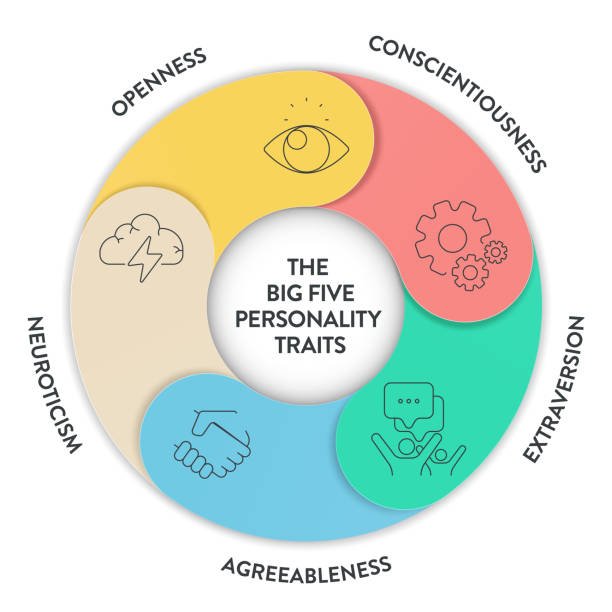
This article explores the neural underpinnings of the Big Five Personality Traits (BFPTs) - Openness to Experience [O], Conscientiousness [C], Extroversion [E], Agreeableness [A], and Neuroticism [N] or the acronym OCEAN - by examining recent studies in neuroscience. Research reveals distinct brain regions associated with each trait, shedding light on their neural bases. Conscientiousness is linked to increased activity in the prefrontal cortex, reflecting its role in self-regulation and goal-directed behavior. Neuroticism shows associations with the amygdala and other limbic structures, indicating a neural predisposition to emotional reactivity and stress sensitivity. Extroversion is related to the dopamine system and ventral striatum, suggesting its connection to reward processing and social engagement. Openness to Experience correlates with increased connectivity in the default mode network and prefrontal cortex (PFC), supporting its association with cognitive flexibility and creativity. Agreeableness is linked to the temporo-parietal junction (TPJ) and brain areas involved in empathy and social cognition. Understanding these neural correlates provides insights into how personality traits are represented in the brain and influence behavior.
References
Abbas, A. I., & Lieberman, J. A. (2015). Pharmacological treatments for schizophrenia. In P. E. Nathan & J. M. Gorman (Eds.), A guide to treatments that work (4th ed.) (pp. 175-215). New York, NY: Oxford Academic. https://doi.org/10.1093/med:psych/9780199342211.003.0006 DOI: https://doi.org/10.1093/med:psych/9780199342211.003.0006
Aguilera, A., & Berridge, C. (2014). Qualitative feedback from a text messaging intervention for depression: benefits, drawbacks, and cultural differences. Journal of Medical Internet Research in Mobile Health (mHealth) and Ubiquitous Health (uHealth) [JMIR mHealth & uHealth], 2(4). Article ID: e3660. https://doi.org/10.2196/mhealth.3660 DOI: https://doi.org/10.2196/mhealth.3660
Almalki, K., Alharbi, O., Al-Ahmadi, W. A., & Aljohani, M. (2020). Anti-procrastination online tool for graduate students based on the pomodoro technique. In Learning and Collaboration Technologies. Human and Technology Ecosystems: 7th International Conference, LCT 2020, Held as Part of the 22nd HCI International Conference, HCII 2020, Copenhagen, Denmark, July 19–24, 2020, Proceedings, Part II 22 (pp. 133-144). Springer International Publishing. https://doi.org/10.1007/978-3-030-50506-6_10 DOI: https://doi.org/10.1007/978-3-030-50506-6_10
Ballard, P. J., Daniel, S. S., Anderson, G., Nicolotti, L., Caballero Quinones, E., Lee, M., & Koehler, A. N. (2021). Incorporating volunteering into treatment for depression among adolescents: Developmental and clinical considerations. Frontiers in Psychology, 12. Article ID: 642910. https://doi.org/10.3389/fpsyg.2021.642910 DOI: https://doi.org/10.3389/fpsyg.2021.642910
Blain, S. D., Grazioplene, R. G., Ma, Y., & DeYoung, C. G. (2020). Toward a neural model of the Openness-Psychoticism dimension: Functional connectivity in the default and frontoparietal control networks. Schizophrenia Bulletin, 46(3), 540-551. https://doi.org/10.1093/schbul/sbz103 DOI: https://doi.org/10.1093/schbul/sbz103
Barnett, A., Zhang, C. J., Johnston, J. M., & Cerin, E. (2018). Relationships between the neighborhood environment and depression in older adults: A systematic review and meta-analysis. International Psychogeriatrics, 30(8), 1153-1176. https://doi.org/10.1017/S104161021700271X DOI: https://doi.org/10.1017/S104161021700271X
Beloe, P., & Derakshan, N. (2020). Adaptive working memory training can reduce anxiety and depression vulnerability in adolescents. Developmental Science, 23(4). Article ID: e12831. https://doi.org/10.1111/desc.12831 DOI: https://doi.org/10.1111/desc.12831
Borton, D., Micera, S., Millán, J. D. R., & Courtine, G. (2013). Personalized neuroprosthetics. Science Translational Medicine, 5(210), 210rv2-210rv2. https://doi.org/10.1126/scitranslmed.3005968 DOI: https://doi.org/10.1126/scitranslmed.3005968
Brown, G.W., Andrews, B. (1986). Social support and depression. In M. H. Appley & R. Trumbull, R. (Eds.), Dynamics of stress. The Plenum series on stress and coping (pp. 257-282). Boston, MA: Springer. https://doi.org/10.1007/978-1-4684-5122-1_13 DOI: https://doi.org/10.1007/978-1-4684-5122-1_13
Cameron, S. K., Rodgers, J., & Dagnan, D. (2018). The relationship between the therapeutic alliance and clinical outcomes in cognitive behaviour therapy for adults with depression: A meta‐analytic review. Clinical Psychology & Psychotherapy, 25(3), 446-456. https://doi.org/10.1002/cpp.2180 DOI: https://doi.org/10.1002/cpp.2180
Carek, P. J., Laibstain, S. E., & Carek, S. M. (2011). Exercise for the treatment of depression and anxiety. The International Journal of Psychiatry in Medicine, 41(1), 15-28. https://doi.org/10.2190/PM.41.1.c DOI: https://doi.org/10.2190/PM.41.1.c
Casillo, S. M., Luy, D. D., & Goldschmidt, E. (2020). A history of the lobes of the brain. World neurosurgery, 134, 353-360. https://doi.org/10.1016/j.wneu.2019.10.155 DOI: https://doi.org/10.1016/j.wneu.2019.10.155
Channon, S., & Green, P. S. S. (1999). Executive function in depression: The role of performance strategies in aiding depressed and non-depressed participants. Journal of Neurology, Neurosurgery & Psychiatry, 66(2), 162-171. https://doi.org/10.1136/jnnp.66.2.162 DOI: https://doi.org/10.1136/jnnp.66.2.162
Chaves, C., Lopez-Gomez, I., Hervas, G., & Vazquez, C. (2017). A comparative study on the efficacy of a positive psychology intervention and a cognitive behavioral therapy for clinical depression. Cognitive Therapy and Research, 41, 417-433. https://doi.org/10.1007/s10608-016-9778-9 DOI: https://doi.org/10.1007/s10608-016-9778-9
Chia, N. K. H., & Ng, M. L. (2021, Summer). Cognition, cognitive abilities and cognitive training program. Unlimited Human! 4-6.
Cho, M., Kim, D., Chung, J., Park, J., You, H., & Yang, Y. (2015). Effects of a cognitive-enhancement group training program on daily living activities, cognition, and depression in the demented elderly. Journal of Physical Therapy Science, 27(3), 681-684. https://doi.org/10.1589/jpts.29.744 DOI: https://doi.org/10.1589/jpts.27.681
Compare, A., Zarbo, C., Shonin, E., Van Gordon, W., & Marconi, C. (2014). Emotional regulation and depression: A potential mediator between heart and mind. Cardiovascular psychiatry and neurology, 2014(1). Article ID: 324374. https://doi.org/10.1155/2014/324374 DOI: https://doi.org/10.1155/2014/324374
Craske, M. G., Treanor, M., Conway, C. C., Zbozinek, T., & Vervliet, B. (2014). Maximizing exposure therapy: An inhibitory learning approach. Behaviour Research and Therapy, 58, 10-23. https://doi.org/10.1016/j.brat.2014.04.006 DOI: https://doi.org/10.1016/j.brat.2014.04.006
Cregg, D. R., & Cheavens, J. S. (2021). Gratitude interventions: Effective self-help? A meta-analysis of the impact on symptoms of depression and anxiety. Journal of Happiness Studies, 22(1), 413-445. https://doi.org/10.1007/s10902-020-00236-6 DOI: https://doi.org/10.1007/s10902-020-00236-6
Cropley, A. J. (1990). Creativity and mental health in everyday life. Creativity Research Journal, 3(3), 167-178. https://doi.org/10.1080/10400419009534351 DOI: https://doi.org/10.1080/10400419009534351
de Jong, R., Hofs, A., Lommen, M. J., van Hout, W. J., De Jong, P. J., & Nauta, M. H. (2023). Treating specific phobia in youth: A randomized controlled microtrial comparing gradual exposure in large steps to exposure in small steps. Journal of Anxiety Aisorders, 96. Article ID: 102712. https://doi.org/10.1016/j.janxdis.2023.102712 DOI: https://doi.org/10.1016/j.janxdis.2023.102712
Dingle, G. A., Sharman, L. S., Haslam, C., Donald, M., Turner, C., Partanen, R., ... & van Driel, M. L. (2021). The effects of social group interventions for depression: Systematic review. Journal of Affective Disorders, 281, 67-81. https://doi.org/10.1016/j.jad.2020.11.125 DOI: https://doi.org/10.1016/j.jad.2020.11.125
Ernst, C. L., & Goldberg, J. F. (2004). Anti-suicide properties of psychotropic drugs: A critical review. Harvard Review of Psychiatry, 12(1), 14-41. https://doi.org/10.1080/714858480 DOI: https://doi.org/10.1080/714858480
Farach, F. J., Pruitt, L. D., Jun, J. J., Jerud, A. B., Zoellner, L. A., & Roy-Byrne, P. P. (2012). Pharmacological treatment of anxiety disorders: Current treatments and future directions. Journal of Anxiety Disorders, 26(8), 833-843. https://doi.org/10.1016/j.janxdis.2012.07.009 DOI: https://doi.org/10.1016/j.janxdis.2012.07.009
Fatima, I., & Malik, S. (2019). Effects of supervisor support on depression symptoms in research students: Time management as moderator. Journal of Behavioural Sciences, 29(1), 1-12.
Faustino, B. (2022). Minding my brain: Fourteen neuroscience‐based principles to enhance psychotherapy responsiveness. Clinical Psychology & Psychotherapy, 29(4), 1254-1275. https://doi.org/10.1002/cpp.2719 DOI: https://doi.org/10.1002/cpp.2719
Forbes, C. E., Poore, J. C., Krueger, F., Barbey, A. K., Solomon, J., & Grafman, J. (2014). The role of executive function and the dorsolateral prefrontal cortex in the expression of neuroticism and conscientiousness. Social Neuroscience, 9(2), 139-151. https://doi.org/10.1080/17470919.2013.871333 DOI: https://doi.org/10.1080/17470919.2013.871333
Frank, R. G., & Shim, R. S. (2023). Toward greater accountability in mental health care. Psychiatric Services, 74(2), 182-187. https://doi.org/10.1176/appi.ps.20220097 DOI: https://doi.org/10.1176/appi.ps.20220097
Genevsky, A., Garrett, C. T., Alexander, P. P., & Vinogradov, S. (2010). Cognitive training in schizophrenia: A neuroscience-based approach. Dialogues in Clinical Neuroscience, 12(3), 416-421. https://doi.org/10.31887/DCNS.2010.12.3/agenevsky DOI: https://doi.org/10.31887/DCNS.2010.12.3/agenevsky
Glover, S. A. O. (1998). Social environments and the emotional well-being of young people. Family Matters, (49), 11-16.
Granero R. (2022). Role of Nutrition and Diet on Healthy Mental State. Nutrients, 14(4). Article No. 750. https://doi.org/10.3390/nu14040750 DOI: https://doi.org/10.3390/nu14040750
Haas, B. W., Omura, K., Constable, R. T., & Canli, T. (2007). Emotional conflict and neuroticism: personality-dependent activation in the amygdala and subgenual anterior cingulate. Behavioral neuroscience, 121(2), 249–256. https://doi.org/10.1037/0735-7044.121.2.249 DOI: https://doi.org/10.1037/0735-7044.121.2.249
Hammond, D. C. (2005). Neurofeedback treatment of depression and anxiety. Journal of Adult Development, 12, 131-137. https://doi.org/10.1007/s10804-005-7029-5 DOI: https://doi.org/10.1007/s10804-005-7029-5
Hammond, D. C. (2007). What is neurofeedback? Journal of Neurotherapy, 10(4), 25-36. https://doi.org/10.1300/J184v10n04_04 DOI: https://doi.org/10.1300/J184v10n04_04
Hibberd, J., & Usmar, J. (2015). This book will make you mindful. London, UK: Quercus Editions.
Hollon, S. D., Stewart, M. O., & Strunk, D. (2006). Enduring effects for cognitive behavior therapy (CBT) in the treatment of depression and anxiety. Annual Review of Psychology, 57(1), 285-315. https://doi.org/10.1146/annurev.psych.57.102904.190044 DOI: https://doi.org/10.1146/annurev.psych.57.102904.190044
Huang, F., Tang, S., Sun, P., & Luo, J. (2018). Neural correlates of novelty and appropriateness processing in externally induced constraint relaxation. NeuroImage, 172, 381-389. https://doi.org/10.1016/j.neuroimage.2018.01.070 DOI: https://doi.org/10.1016/j.neuroimage.2018.01.070
Huang, Y. J., Lane, H. Y., & Lin, C. H. (2017). New treatment strategies of depression: based on mechanisms related to neuroplasticity. Neural Plasticity, 2017(1). Article ID: 4605971. https://doi.org/10.1155/2017/4605971 DOI: https://doi.org/10.1155/2017/4605971
Huo, T., Li, Y., Zhuang, K., Song, L., Wang, X., Ren, Z., ... & Qiu, J. (2020). Industriousness moderates the link between default mode network subsystem and creativity. Neuroscience, 427, 92-104. https://doi.org/10.1016/j.neuroscience.2019.11.049 DOI: https://doi.org/10.1016/j.neuroscience.2019.11.049
Jacob, J., Stankovic, M., Spuerck, I., & Shokraneh, F. (2022). Goal setting with young people for anxiety and depression: What works for whom in therapeutic relationships? A literature review and insight analysis. BMC Psychology, 10(1). Article No. 171. https://doi.org/10.1186/s40359-022-00879-5 DOI: https://doi.org/10.1186/s40359-022-00879-5
Johansen, A., Armand, S., Plavén-Sigray, P., Nasser, A., Ozenne, B., Petersen, I. N., ... & Knudsen, G. M. (2023). Effects of escitalopram on synaptic density in the healthy human brain: A randomized controlled trial. Molecular Psychiatry, 28(10), 4272-4279. https://doi.org/10.1038/s41380-023-02285-8 DOI: https://doi.org/10.1038/s41380-023-02285-8
John, O. P., Donahue, E. M., & Kentle, R. L. (1991). The Big Five Inventory - Versions 41 and 54. Berkeley, CA: University of California-Berkeley, Institute of Personality and Social Research. https://doi.org/10.1037/t07550-000 DOI: https://doi.org/10.1037/t07550-000
John, O. P., Naumann, L. P., & Soto, C. J. (2008). Paradigm shift to the integrative Big-Five traits taxonomy: History, measurement, and conceptual issues. In O. P. John, R. W. Robins, & L. A. Pervin (Eds.), Handbook of personality: Theory and research (pp. 114-158). New York, NY: Guilford Press.
Jun, J., & Yoo, S. (2018). Three research strategies of neuroscience and the future of legal imaging evidence. Frontiers in Neuroscience, 12. Aritcle No. 120. https://doi.org/10.3389/fnins.2018.00120 DOI: https://doi.org/10.3389/fnins.2018.00120
Jylhä, P., & Isometsä, E. (2006). The relationship of neuroticism and extraversion to symptoms of anxiety and depression in the general population. Depression and Anxiety, 23(5), 281-289. https://doi.org/10.1002/da.20167 DOI: https://doi.org/10.1002/da.20167
Karavidas, M. K., Lehrer, P. M., Vaschillo, E., Vaschillo, B., Marin, H., Buyske, S., ... & Hassett, A. (2007). Preliminary results of an open label study of heart rate variability biofeedback for the treatment of major depression. Applied Psychophysiology and Biofeedback, 32, 19-30. https://doi.org/10.1007/s10484-006-9029-z DOI: https://doi.org/10.1007/s10484-006-9029-z
Kong, F., Zhao, J., You, X., & Xiang, Y. (2020). Gratitude and the brain: Trait gratitude mediates the association between structural variations in the medial prefrontal cortex and life satisfaction. Emotion, 20(6), 917-926. https://doi.org/10.1037/emo0000617 DOI: https://doi.org/10.1037/emo0000617
Lei, X., Yang, T., & Wu, T. (2015). Functional neuroimaging of extraversion-introversion. Neuroscience Bulletin, 31, 663-675. https://doi.org/10.1007/s12264-015-1565-1 DOI: https://doi.org/10.1007/s12264-015-1565-1
Lilienthal, L., Tamez, E., Shelton, J. T., Myerson, J., & Hale, S. (2013). Dual n-back training increases the capacity of the focus of attention. Psychonomic Bulletin & Review, 20, 135-141. https://doi.org/10.3758/s13423-012-0335-6 DOI: https://doi.org/10.3758/s13423-012-0335-6
Linkievicz, N. M., Sgnaolin, V., Engroff, P., Behr Gomes Jardim, G., & Cataldo, A. (2022). Association between Big Five personality factors and medication adherence in the elderly. Trends in Psychiatry and Psychotherapy, 44. Article ID: e20200143. https://doi.org/10.47626/2237-6089-2020-0143 DOI: https://doi.org/10.47626/2237-6089-2020-0143
Manosso, L. M., Moretti, M., & Rodrigues, A. L. S. (2013). Nutritional strategies for dealing with depression. Food & Function, 4(12), 1776-1793. https://doi.org/10.1039/C3FO60246J DOI: https://doi.org/10.1039/c3fo60246j
Marlatt, G. A., & Kristeller, J. L. (1999). Mindfulness and meditation. In W. R. Miller (Ed.), Integrating spirituality into treatment: Resources for practitioners (pp. 67–84). Washington, DC: American Psychological Association. https://doi.org/10.1037/10327-004 DOI: https://doi.org/10.1037/10327-004
Martin, M. W. (1999). Depression and moral health: A response to the commentary. Philosophy, Psychiatry, & Psychology, 6(4), 295-298.
Marwaha, S., Palmer, E., Suppes, T., Cons, E., Young, A. H., & Upthegrove, R. (2023). Novel and emerging treatments for major depression. The Lancet, 401(10371), 141-153. https://doi.org/10.1016/S0140-6736(22)02080-3 DOI: https://doi.org/10.1016/S0140-6736(22)02080-3
Mobbs, D., Hagan, C. C., Azim, E., Menon, V., & Reiss, A. L. (2005). Personality predicts activity in reward and emotional regions associated with humor. Proceedings of the National Academy of Sciences of the United States of America, 102(45), 16502-16506. https://doi.org/10.1073/pnas.0408457102 DOI: https://doi.org/10.1073/pnas.0408457102
Monderer, R. S., Harrison, D. M., & Haut, S. R. (2002). Neurofeedback and epilepsy. Epilepsy & Behavior, 3(3), 214-218. https://doi.org/10.1016/s1525-5050(02)00001-x DOI: https://doi.org/10.1016/S1525-5050(02)00001-X
Niv, S. (2013). Clinical efficacy and potential mechanisms of neurofeedback. Personality and Individual Differences, 54(6), 676-686. https://doi.org/10.1016/j.paid.2012.11.037 DOI: https://doi.org/10.1016/j.paid.2012.11.037
O’Brien, J. (2021). Brain fitness for school children: BrainFutures champions neuroscience-based interventions. Childhood Education, 97(1), 42-49. https://doi.org/10.1080/00094056.2021.1873692 DOI: https://doi.org/10.1080/00094056.2021.1873692
Owens, M. M., Hyatt, C. S., Gray, J. C., Carter, N. T., MacKillop, J., Miller, J. D., & Sweet, L. H. (2019). Cortical morphometry of the five-factor model of personality: Findings from the Human Connectome Project full sample. Social Cognitive and Affective Neuroscience, 14(4), 381-395. https://doi.org/10.1093/scan/nsz017 DOI: https://doi.org/10.1093/scan/nsz017
Pessoa, L. (2022). The entangled brain: How perception, cognition, and emotion are woven together. Cambridge, MA: MIT Press. https://doi.org/10.7551/mitpress/14636.001.0001 DOI: https://doi.org/10.7551/mitpress/14636.001.0001
Pratt, L. A., Ford, D. E., Crum, R. M., Armenian, H. K., Gallo, J. J., & Eaton, W. W. (1996). Depression, psychotropic medication, and risk of myocardial infarction: prospective data from the Baltimore ECA follow-up. Circulation, 94(12), 3123-3129. https://doi.org/10.1161/01.CIR.94.12.3123 DOI: https://doi.org/10.1161/01.CIR.94.12.3123
Răban-Motounu, N. (2015). Creative Techniques In The Psychotherapy of Depression. Journal of Experiential Psychotherapy/Revista de PSIHOterapie Experientiala, 18(2), 28-34.
Rammstedt, B., & John, O.P. (2020). Big Five Inventory. In V. Zeigler-Hill, & T. K. Shackelford (Eds), Encyclopedia of Personality and Individual Differences (pp. 469-471). Cham, Switzerland: Springer. https://doi.org/10.1007/978-3-319-24612-3_445 DOI: https://doi.org/10.1007/978-3-319-24612-3_445
Reed, M. K. (1994). Social skills training to reduce depression in adolescents. Adolescence, 29(114), 293-302.
Riskind, J. H., Sarampote, C. S., & Mercier, M. A. (1996). For every malady a sovereign cure: Optimism training. Journal of Cognitive Psychotherapy, 10(2), 105–117. DOI: https://doi.org/10.1891/0889-8391.10.2.105
Sachdeva, A., Kumar, K., & Anand, K. S. (2015). Non pharmacological cognitive enhancers–current perspectives. Journal of Clinical and Diagnostic Research: JCDR, 9(7), VE01-VE06. https://doi.org/10.7860/JCDR/2015/13392.6186 DOI: https://doi.org/10.7860/JCDR/2015/13392.6186
Sarris, J., O’Neil, A., Coulson, C. E., Schweitzer, I., & Berk, M. (2014). Lifestyle medicine for depression. BMC Psychiatry, 14, 1-13. https://doi.org/10.1186/1471-244X-14-107 DOI: https://doi.org/10.1186/1471-244X-14-107
Schwartz, M. S., & Andrasik, F. (Eds.). (2017). Biofeedback: A practitioner's guide. New York, NY: Guilford Press. https://doi.org/10.1080/07317107.2017.1307683 DOI: https://doi.org/10.1080/07317107.2017.1307683
Silverstone, P. H., Bercov, M., Suen, V. Y., Allen, A., Cribben, I., Goodrick, J., ... & McCabe, C. (2015). Initial findings from a novel school-based program, EMPATHY, which may help reduce depression and suicidality in youth. PloS One, 10(5). Article ID: e0125527. https://doi.org/10.1371/journal.pone.0125527 DOI: https://doi.org/10.1371/journal.pone.0125527
Slaski, M., & Cartwright, S. (2003). Emotional intelligence training and its implications for stress, health and performance. Stress and Health, 19(4), 233-239. https://doi.org/10.1002/smi.979 DOI: https://doi.org/10.1002/smi.979
Solomonov, N., Bress, J. N., Sirey, J. A., Gunning, F. M., Flückiger, C., Raue, P. J., ... & Alexopoulos, G. S. (2019). Engagement in socially and interpersonally rewarding activities as a predictor of outcome in “Engage” behavioral activation therapy for late-life depression. The American Journal of Geriatric Psychiatry, 27(6), 571-578. https://doi.org/10.1016/j.jagp.2018.12.033 DOI: https://doi.org/10.1016/j.jagp.2018.12.033
Street, H. (2002). Exploring relationships between goal setting, goal pursuit and depression: A review. Australian Psychologist, 37(2), 95-103. https://doi.org/10.1080/00050060210001706736 DOI: https://doi.org/10.1080/00050060210001706736
Sun, C. (2023). Curiosity-driven learning in artificial intelligence and its applications. (Doctoral thesis, Nanyang Technological University, Singapore). [Access: https://hdl.handle.net/10356/172831].
Sun, J., Shi, L., Chen, Q., Yang, W., Wei, D., Zhang, J., ... & Qiu, J. (2019). Openness to experience and psychophysiological interaction patterns during divergent thinking. Brain Imaging and Behavior, 13, 1580-1589. https://doi.org/10.1007/s11682-018-9965-2 DOI: https://doi.org/10.1007/s11682-018-9965-2
Travers-Hill, E., Dunn, B. D., Hoppitt, L., Hitchcock, C., & Dalgleish, T. (2017). Beneficial effects of training in self-distancing and perspective broadening for people with a history of recurrent depression. Behaviour Research and Therapy, 95, 19-28. http://doi.org/10.1016/j.brat.2017.05.008 DOI: https://doi.org/10.1016/j.brat.2017.05.008
Tzschoppe, J., Nees, F., Banaschewski, T., Barker, G. J., Büchel, C., Conrod, P. J., ... & Flor, H. (2014). Aversive learning in adolescents: Modulation by amygdala-prefrontal and amygdala-hippocampal connectivity and neuroticism. Neuropsychopharmacology, 39(4), 875-884. https://doi.org/10.1038/npp.2013.287 DOI: https://doi.org/10.1038/npp.2013.287
Uliaszek, A. A., Hauner, K. K., Zinbarg, R. E., Craske, M. G., Mineka, S., Griffith, J. W., & Rose, R. D. (2009). An examination of content overlap and disorder-specific predictions in the associations of neuroticism with anxiety and depression. Journal of Research in Personality, 43(5), 785-794. https://doi.org/10.1016/j.jrp.2009.05.009 DOI: https://doi.org/10.1016/j.jrp.2009.05.009
van der Knaap, M. S., & Valk, J. (2005). Myelin and white matter. In M. S. van der Knaap & J. Valk (Eds.), Magnetic resonance of myelination and myelin disorders (pp. 1-19). Berlin, Germany: Springer. https://doi.org/10.1007/3-540-27660-2 DOI: https://doi.org/10.1007/3-540-27660-2
Wang, J. R., & Hsieh, S. (2013). Neurofeedback training improves attention and working memory performance. Clinical Neurophysiology, 124(12), 2406-2420. https://doi.org/10.1016/j.clinph.2013.05.020 DOI: https://doi.org/10.1016/j.clinph.2013.05.020
Wang, Y., Liao, L., Lin, X., Sun, Y., Wang, N., Wang, J., & Luo, F. (2021). A bibliometric and visualization analysis of mindfulness and meditation research from 1900 to 2021. International Journal of Environmental Research and Public Health, 18(24). Article ID: 13150. https://doi.org/10.3390/ijerph182413150 DOI: https://doi.org/10.3390/ijerph182413150
Wang, Z., Li, Y., An, J., Dong, W., Li, H., Ma, H., ... & Wang, G. (2022). Effects of restorative environment and presence on anxiety and depression based on interactive virtual reality scenarios. International Journal of Environmental Research and Public Health, 19(13). Article ID: 7878. https://doi.org/10.3390/ijerph19137878 DOI: https://doi.org/10.3390/ijerph19137878
Wenzel, A. (2017). Basic strategies of cognitive behavioral therapy. Psychiatric Clinics, 40(4), 597-609. https://doi.org/10.1016/j.psc.2017.07.001 DOI: https://doi.org/10.1016/j.psc.2017.07.001
Wolinsky, F. D., Mahncke, H. W., Weg, M. W. V., Martin, R., Unverzagt, F. W., Ball, K. K., ... & Tennstedt, S. L. (2009). The ACTIVE cognitive training interventions and the onset of and recovery from suspected clinical depression. Journals of Gerontology Series B: Psychological Sciences and Social Sciences, 64(5), 577-585. https://doi.org/10.1093/geronb/gbp061 DOI: https://doi.org/10.1093/geronb/gbp061
Xie, G. H., & Deng, M. J. (2023). The spectrum of imagination in autism. Saarland, Germany: Lambert Academic Publishing.
Xie, G. H., & Wang, Q. (2021). Mandala coloring as a therapeutic tool in treating stress-anxiety-depression (SAD) syndrome. Asian Journal of Interdisciplinary Research, 4(4), 30-36. https://doi.org/10.54392/ajir2144 DOI: https://doi.org/10.54392/ajir2144
Yazdani, M., Rezaei, S., & Pahlavanzadeh, S. (2010). The effectiveness of stress management training program on depression, anxiety and stress of the nursing students. Iranian Journal of Nursing and Midwifery Research, 15(4), 208-215.
Yu, L., Norton, S., & McCracken, L. M. (2017). Change in “self-as-context”(“perspective-taking”) occurs in acceptance and commitment therapy for people with chronic pain and is associated with improved functioning. The Journal of Pain, 18(6), 664-672. https://doi.org/10.1016/j.jpain.2017.01.005 DOI: https://doi.org/10.1016/j.jpain.2017.01.005
Yucha, C., & Montgomery, D. (2008). Evidence-based practice in biofeedback and neurofeedback. Wheat Ridge, CO: Association for Applied Psychophysiology and Biofeedback (AAPB).
Zhao, M., Tuo, H., Wang, S., & Zhao, L. (2020). The effects of dietary nutrition on sleep and sleep disorders. Mediators of inflammation, 2020(1). Article ID: 3142874. https://doi.org/10.1155/2020/3142874 DOI: https://doi.org/10.1155/2020/3142874
Downloads
Published
How to Cite
Issue
Section
License
Copyright (c) 2024 The Asian Educational Therapist

This work is licensed under a Creative Commons Attribution 4.0 International License.