A Brief Re-examination of the Pervasive & Distressing Societal Issue of Child Abuse
DOI:
https://doi.org/10.64663/aet.37Keywords:
Child Abuse, Neglect, Safeguarding, Sociopsychologial FrameworkAbstract
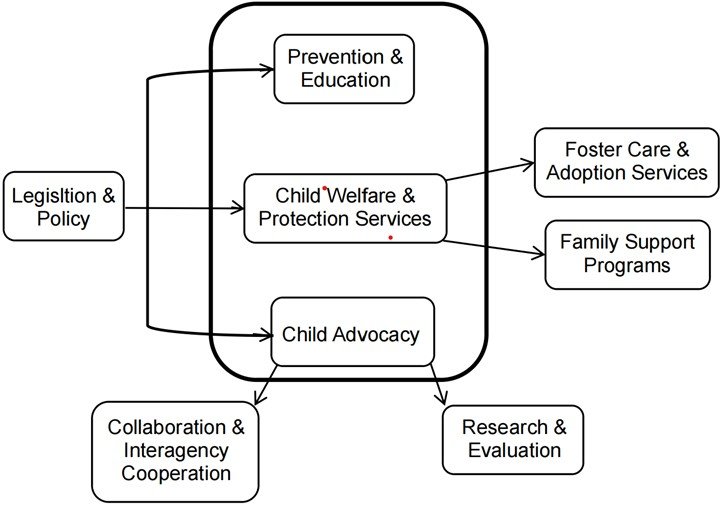
Child abuse (CAb) is a pervasive and distressing societal issue today. It encompasses various forms, including physical, emotional, sexual, and neglect. Identifying signs and symptoms is crucial for early intervention, with indicators like unexplained injuries, withdrawal, and changes in behavior. Causes of CAb can range from family stressors to intergenerational cycles of violence. The consequences are profound, affecting a child’s physical and psychological well-being, and potentially perpetuating a cycle of abuse. Preventative measures and support systems are essential to mitigate the devastating impact on vulnerable children. The aim of this paper is to re-examine the issue of CAb. In the context of three selected sociopsychological frameworks (i.e., Social Learning Theory, Attachment Theory, and Cycle of Violence Hypothesis), it is the authors’ attempt to provide brief insights into the complex interplay of risk factors in CAb. In addition, the two authors also proposed his basc framework of safeguarding children’s welfare and child protection.
References
Afifi, T. O., MacMillan, H. L., Boyle, M., Taillieu, T., Cheung, K., & Sareen, J. (2014). Child abuse and mental disorders in Canada. Canadian Medical Association Journal, 186(9), E324-E332. https://doi.org/10.1503/cmaj.131792 DOI: https://doi.org/10.1503/cmaj.131792
Arslan, G., Genç, E., Yıldırım, M., Tanhan, A., & Allen, K. A. (2022). Psychological maltreatment, meaning in life, emotions, and psychological health in young adults: A multi-mediation approach. Children and Youth Services Review, 132. Article ID: 106296. https://doi.org/10.1016/j.childyouth.2021.106296 DOI: https://doi.org/10.1016/j.childyouth.2021.106296
Bacon, H., & Richardson, S. (2001). Attachment theory and child abuse: An overview of the literature for practitioners. Child Abuse Review: Journal of the British Association for the Study and Prevention of Child Abuse and Neglect, 10(6), 377-397. https://doi.org/10.1002/car.718 DOI: https://doi.org/10.1002/car.718
Barbell, K., & Freundlich, M. (2001). Foster care today. Washington, DC: Casey Family Programs National Center for Resource Family Support. https://www.researchgate.net/publication/266405367_Foster_Care_Today
Bifulco, A., Moran, P. M., Baines, R., Bunn, A., & Stanford, K. (2002). Exploring psychological abuse in childhood: II. Association with other abuse and adult clinical depression. Bulletin of the Menninger Clinic, 66(3), 241-258. https://doi.org/10.1521/bumc.66.3.241.23366 DOI: https://doi.org/10.1521/bumc.66.3.241.23366
Black, D. A., Slep, A. M. S., & Heyman, R. E. (2001). Risk factors for child psychological abuse. Aggression and Violent Behavior, 6(2-3), 189-201. https://doi.org/10.1016/S1359-1789(00)00021-5 DOI: https://doi.org/10.1016/S1359-1789(00)00022-7
Briggs, F. (2020). Child protection: A guide for teachers and child care professionals. Oxfordshire, UK: Routledge. https://www.routledge.com/Child-Protection-A-guide-for-teachers-and-child-care-professionals/Briggs/p/book/9781864482218 DOI: https://doi.org/10.4324/9781003134701
Burton, D. L., Miller, D. L., & Shill, C. T. (2002). A social learning theory comparison of the sexual victimization of adolescent sexual offenders and nonsexual offending male delinquents. Child Abuse & Neglect, 26(9), 893-907. https://doi.org/10.1016/s0145-2134(02)00360-5 DOI: https://doi.org/10.1016/S0145-2134(02)00360-5
Caliso, J. A., & Milner, J. S. (1992). Childhood history of abuse and child abuse screening. Child Abuse & Neglect, 16(5), 647-659. https://doi.org/10.1016/0145-2134(92)90103-X DOI: https://doi.org/10.1016/0145-2134(92)90103-X
Çelik, B. Ç., & Odacı, H. (2020). Does child abuse have an impact on self-esteem, depression, anxiety and stress conditions of individuals? International Journal of Social Psychiatry, 66(2), 171-178. https://doi.org/10.1177/0020764019894618 DOI: https://doi.org/10.1177/0020764019894618
Centers for Disease Control and Prevention (2021, August 23). Adverse childhood experiences (ACEs): Preventing early trauma to improve adult health. Retrieved from: https://www.cdc.gov/vitalsigns/aces/index.html#print
Chaffin, M., Bonner, B. L., & Hill, R. F. (2001). Family preservation and family support programs: Child maltreatment outcomes across client risk levels and program types. Child Abuse & Neglect, 25(10), 1269-1289. https://doi.org/10.1016/s0145-2134(01)00275-7 DOI: https://doi.org/10.1016/S0145-2134(01)00275-7
Children’s Bureau (n.d.). Definitions of child abuse and neglect. Retrieved from: https://www.childwelfare.gov/topics/can/defining/
Choi, J. K., Wang, D., & Jackson, A. P. (2019). Adverse experiences in early childhood and their longitudinal impact on later behavioral problems of children living in poverty. Child Abuse & Neglect, 98. Article ID: 104181. https://doi.org/10.1016/j.chiabu.2019.104181 DOI: https://doi.org/10.1016/j.chiabu.2019.104181
Christian, C. W., & Committee on Child Abuse and Neglect (2015). The evaluation of suspected child physical abuse. Pediatrics, 135(5), e20150356. https://doi.org/10.1542/peds.2015-2010 DOI: https://doi.org/10.1542/peds.2015-0356
Cohen, J. A., Mannarino, A. P., Zhitova, A. C., & Capone, M. E. (2003). Treating child abuse-related posttraumatic stress and comorbid substance abuse in adolescents. Child Abuse & Neglect, 27(12), 1345-1365. https://doi.org/10.1016/J.CHIABU.2003.08.001 DOI: https://doi.org/10.1016/j.chiabu.2003.08.001
Connell, C. M., Bergeron, N., Katz, K. H., Saunders, L., & Tebes, J. K. (2007). Re-referral to child protective services: The influence of child, family, and case characteristics on risk status. Child Abuse & Neglect, 31(5), 573-588. https://doi.org/10.1016/j.chiabu.2006.12.004 DOI: https://doi.org/10.1016/j.chiabu.2006.12.004
Daro, D., & Donnelly, A. C. (2002). Child abuse prevention: Accomplishments and challenges. In J. E. B. Myers, L. Berliner, J. Briere, C. T. Hendrix, C. Jenny, & T. A. Reid (Eds.), The APSAC handbook on child maltreatment (2nd ed., pp. 431–448). Thousand Oaks, CA: Sage Publications, Inc. https://psycnet.apa.org/record/2002-06051-017
D'arcy-Bewick, S., Terracciano, A., Turiano, N., Sutin, A. R., Long, R., & O'Súilleabháin, P. S. (2022). Childhood abuse and neglect, and mortality risk in adulthood: a systematic review and meta-analysis. Child Abuse & Neglect, 134. Article ID: 105922. https://doi.org/10.1016/j.chiabu.2022.105922 DOI: https://doi.org/10.1016/j.chiabu.2022.105922
Davies, E., Mattews, B., & Read, J. (2014). Mandatory reporting? Issues to consider when developing legislation and policy to improve discovery of child abuse. IALS Student Law Review, 2, 9-20. https://journals.sas.ac.uk/lawreview/article/view/2110 DOI: https://doi.org/10.14296/islr.v2i1.2110
Elliott, K., & Urquiza, A. (2006). Ethnicity, culture, and child maltreatment. Journal of social issues, 62(4), 787-809. https://doi.org/10.1111/j.1540-4560.2006.00487.x DOI: https://doi.org/10.1111/j.1540-4560.2006.00487.x
Elmer, E. (1979). Child abuse and family stress. Journal of Social Issues, 35(2), 60-71. https://doi.org/10.1111/j.1540-4560.1979.tb00801.x DOI: https://doi.org/10.1111/j.1540-4560.1979.tb00801.x
Engel, B. (2023). The emotionally abusive relationship: How to stop being abused and how to stop abusing. Hoboken, NJ: John Wiley & Sons. https://www.amazon.sg/Emotionally-Abusive-Relationship-Abused-Abusing/dp/1665193506
Fallon, B., Ma, J., Allan, K., Pillhofer, M., Trocmé, N., & Jud, A. (2013). Opportunities for prevention and intervention with young children: lessons from the Canadian incidence study of reported child abuse and neglect. Child and Adolescent Psychiatry and Mental Health, 7(1), 1-13. https://doi.org/10.1186/1753-2000-7-4 DOI: https://doi.org/10.1186/1753-2000-7-4
Finkelhor, D. (1982). Sexual abuse: A sociological perspective. Child abuse & neglect, 6(1), 95-102. https://doi.org/10.1016/0145-2134(82)90055-2 DOI: https://doi.org/10.1016/0145-2134(82)90055-2
Forsman, M., & Långström, N. (2012). Child maltreatment and adult violent offending: population-based twin study addressing the ‘cycle of violence’ hypothesis. Psychological Medicine, 42(9), 1977-1983. https://doi.org/10.1017/S0033291711003060 DOI: https://doi.org/10.1017/S0033291711003060
Fortson, B. L., Klevens, J., Merrick, M. T., Gilbert, L. K., & Alexander, S. P. (2016). Preventing child abuse and neglect: A technical package for policy, norm, and programmatic activities. Atlanta, GA: Centers for Disease Control and Prevention. https://stacks.cdc.gov/view/cdc/38864?utm_source=chatgpt.com DOI: https://doi.org/10.15620/cdc.38864
Freeman-Longo, R. E. (1997). Reducing sexual abuse in America: legislating tougher laws or public education and prevention. New England Journal on Criminal & Civil Confinement, 23, 303-331. https://www.ojp.gov/ncjrs/virtual-library/abstracts/reducing-sexual-abuse-america-legislating-tougher-laws-or-public
Gelles, R. J. (2017). What to learn from cross-cultural and historical research on child abuse and neglect: An overview. In Child Abuse and Neglect: Biosocial Dimensions-Foundations of Human Behavior. Oxfordshire, UK: Routledge. https://www.taylorfrancis.com/books/mono/10.4324/9781315081441/child-abuse-neglect-jane-lancaster-richard-gelles
Gil, D. G. (1975). Unraveling child abuse. American Journal of Orthopsychiatry, 45(3), 346. https://doi.org/10.1111/j.1939-0025.1975.tb02545.x DOI: https://doi.org/10.1111/j.1939-0025.1975.tb02545.x
Gonzalez, S., Rodriguez, C. M., & Paine, E. (2022). Examining gender-specific modeling in the intergenerational transmission of parenting style and physical child abuse risk. Journal of Child and Family Studies, 31(9), 2344-2358. https://doi.org/10.1007/s10826-022-02232-1 DOI: https://doi.org/10.1007/s10826-022-02232-1
Gracia, E., & Musitu, G. (2003). Social isolation from communities and child maltreatment: A cross-cultural comparison. Child Abuse & Neglect, 27(2), 153-168. https://doi.org/10.1016/s0145-2134(02)00538-0 DOI: https://doi.org/10.1016/S0145-2134(02)00538-0
Griffith, A. K. (2022). Parental burnout and child maltreatment during the COVID-19 pandemic. Journal of Family Violence, 37(5), 725-731. https://doi.org/10.1007/s10896-020-00172-2 DOI: https://doi.org/10.1007/s10896-020-00172-2
Guo, G. Q. (2023). Is Hikikomori syndrome ‘modern-day depression’? A nosological perspective. The Asian Educational Therapist, 1(1), 21-32. https://doi.org/10.64663/aet.24 DOI: https://doi.org/10.64663/aet.24
Hébert, M., Lavoie, F., & Blais, M. (2014). Post Traumatic Stress Disorder/PTSD in adolescent victims of sexual abuse: Resilience and social support as protection factors. Ciencia & Saude Coletiva, 19, 685-694. https://doi.org/10.1590/1413-81232014193.15972013 DOI: https://doi.org/10.1590/1413-81232014193.15972013
Herbert, J., Ghan, N., Salveron, M., & Walsh, W. (2021). Possible factors supporting cross-agency collaboration in child abuse cases: A scoping review. Journal of Child Sexual Abuse, 30(2), 167-191. https://doi.org/10.1080/10538712.2020.1856994 DOI: https://doi.org/10.1080/10538712.2020.1856994
Hofstede, G. (1998). Attitudes, values and organizational culture: Disentangling the concepts. Organization Studies, 19(3), 477-493. https://doi.org/10.1177/017084069801900305 DOI: https://doi.org/10.1177/017084069801900305
Horsfall, B., Bromfield, L., & McDonald, M. (2010). Are social marketing campaigns effective in preventing child abuse and neglect? Melbourne, Australia: Australian Institute of Family Studies. https://www.semanticscholar.org/paper/Are-social-marketing-campaigns-effective-in-child-Horsfall-Bromfield/4b86a2e0548bf14cd646ec2f2e179ca6757406f2
Juliano, M. C. C., & Yunes, M. A. M. (2014). Reflections on the social support network as a mechanism for the protection and promotion of resilience. Ambiente & Sociedade, 17, 135-154. https://www.researchgate.net/publication/287691170_Reflections_on_the_social_support_network_as_a_mechanism_for_the_protection_and_promotion_of_resilience DOI: https://doi.org/10.1590/S1414-753X2014000300009
Karjalainen, P., Kiviruusu, O., Santalahti, P., & Aronen, E. T. (2021). Parents' perceptions of a group‐based parenting programme in families with child protection and other family support services in a real‐life setting. Child & Family Social Work, 26(1), 38-49. https://doi.org/10.1111/cfs.12787 DOI: https://doi.org/10.1111/cfs.12787
Kellogg, N. D., & Committee on Child Abuse and Neglect (2007). Evaluation of suspected child physical abuse. Pediatrics, 119(6), 1232-1241. https://doi.org/10.1542/peds.2007-0883 DOI: https://doi.org/10.1542/peds.2007-0883
Kothari, B. H., Fischer, C., Mullican, N., Lipscomb, S. T., & Jaramillo, J. (2022). Interagency collaboration among community organizations serving children and families in child welfare. Journal of Community & Applied Social Psychology, 32(6), 1115-1132. https://doi.org/10.1002/casp.2612 DOI: https://doi.org/10.1002/casp.2612
Kovler, M. L., Ziegfeld, S., Ryan, L. M., Goldstein, M. A., Gardner, R., Garcia, A. V., & Nasr, I. W. (2021). Increased proportion of physical child abuse injuries at a level I pediatric trauma center during the Covid-19 pandemic. Child Abuse & Neglect, 116. Article ID: 104756. https://doi.org/10.1016/j.chiabu.2020.104756 DOI: https://doi.org/10.1016/j.chiabu.2020.104756
Landers, A. L., Danes, S. M., Campbell, A. R., & Hawk, S. W. (2021). Abuse after abuse: The recurrent maltreatment of American Indian children in foster care and adoption. Child Abuse & Neglect, 111. Article ID: 104805. https://pubmed.ncbi.nlm.nih.gov/33307520/ DOI: https://doi.org/10.1016/j.chiabu.2020.104805
Ma, J., Han, Y., & Kang, H. R. (2022). Physical punishment, physical abuse, and child behavior problems in South Korea. Child Abuse & Neglect, 123, 105385. https://doi.org/10.1016/j.chiabu.2021.105385 DOI: https://doi.org/10.1016/j.chiabu.2021.105385
Manchikanti Gómez, A. (2011). Testing the cycle of violence hypothesis: Child abuse and adolescent dating violence as predictors of intimate partner violence in young adulthood. Youth & Society, 43(1), 171-192. https://doi.org/10.1177/0044118X09358313 DOI: https://doi.org/10.1177/0044118X09358313
McDonald, K. C. (2007). Child abuse: Approach and management. American Family Physician, 75(2), 221-228. https://pubmed.ncbi.nlm.nih.gov/17263217/
Milner, J. S., Robertson, K. R., & Rogers, D. L. (1990). Childhood history of abuse and adult child abuse potential. Journal of Family Violence, 5(1), 15-34. https://doi.org/10.1007/BF00979136 DOI: https://doi.org/10.1007/BF00979136
Min, M., Farkas, K., Minnes, S., & Singer, L. T. (2007). Impact of childhood abuse and neglect on substance abuse and psychological distress in adulthood. Journal of Traumatic Stress, 20(5), 833-844. https://doi.org/10.1002/jts.20250 DOI: https://doi.org/10.1002/jts.20250
Ministry of Social and Family Development (2023, March 31). Break the silence: Child abuse. Retrieved from: https://www.msf.gov.sg/what-we-do/break-the-silence/domestic-violence/child-abuse#.
Moncher, F. J. (1995). Social isolation and child-abuse risk. Families in Society, 76(7), 421-433. https://doi.org/10.1177/104438949507600704 DOI: https://doi.org/10.1177/104438949507600704
Montgomery, E., Just-Østergaard, E., & Jervelund, S. S. (2019). Transmitting trauma: a systematic review of the risk of child abuse perpetrated by parents exposed to traumatic events. International Journal of Public Health, 64, 241-251. https://doi.org/10.1007/s00038-018-1185-4 DOI: https://doi.org/10.1007/s00038-018-1185-4
Morgan, C. H., Pu, D. F., & Rodriguez, C. M. (2022). Parenting style history in predicting harsh parenting and child abuse risk across the transition to parenthood: Role of gender. Child Abuse & Neglect, 12. Article ID: 105587. https://doi.org/10.1016/j.chiabu.2022.105587 DOI: https://doi.org/10.1016/j.chiabu.2022.105587
Mullen, P. E., Martin, J. L., Anderson, J. C., Romans, S. E., & Herbison, G. P. (1993). Childhood sexual abuse and mental health in adult life. The British Journal of Psychiatry, 163(6), 721-732. https://doi.org/10.1192/bjp.163.6.721 DOI: https://doi.org/10.1192/bjp.163.6.721
National Society for Prevention of Cruelty to Children (NSPCC) (2023). Safeguarding children and child protection. Retrieved from: https://learning.nspcc.org.uk/safeguarding-child-protection# .
Olafson, E. (2002). Attachment theory and child abuse: Some cautions. Journal of Child Sexual Abuse, 11(1), 125-129. https://doi.org/10.1300/J070v11n01_06 DOI: https://doi.org/10.1300/J070v11n01_06
O'Reilly, R., Wilkes, L., Luck, L., & Jackson, D. (2010). The efficacy of family support and family preservation services on reducing child abuse and neglect: What the literature reveals. Journal of Child Health Care, 14(1), 82-94. https://doi.org/10.1177/1367493509347114 DOI: https://doi.org/10.1177/1367493509347114
Oswald, S. H., Heil, K., & Goldbeck, L. (2010). History of maltreatment and mental health problems in foster children: A review of the literature. Journal of Pediatric Psychology, 35(5), 462-472. https://doi.org/10.1093/jpepsy/jsp114 DOI: https://doi.org/10.1093/jpepsy/jsp114
Parker, J., McMillan, L., Olson, S., Ruppel, S., & Vieth, V. (2020). Responding to basic and complex cases of child abuse: A comparison study of recent and current child advocacy studies (CAST) students with DSS workers in the field. Journal of Child & Adolescent Trauma, 13, 357-364. https://doi.org/10.1007/s40653-019-00297-7 DOI: https://doi.org/10.1007/s40653-019-00297-7
Pfohl, S. J. (1977). The ‘discovery’ of child abuse. Social Problems, 24(3), 310-323. https://doi.org/10.2307/800083 DOI: https://doi.org/10.2307/800083
Racine, N., Dimitropoulos, G., Hartwick, C., Eirich, R., van Roessel, L., & Madigan, S. (2021). Characteristics and service needs of maltreated children referred for mental health services at a child advocacy centre in Canada. Journal of the Canadian Academy of Child and Adolescent Psychiatry, 30(2), 92-103. https://psycnet.apa.org/record/2021-40236-003
Romero-Martínez, Á., Figueiredo, B., & Moya-Albiol, L. (2014). Childhood history of abuse and child abuse potential: The role of parent's gender and timing of childhood abuse. Child abuse & neglect, 38(3), 510-516. https://doi.org/0.1016/j.chiabu.2013.09.010 DOI: https://doi.org/10.1016/j.chiabu.2013.09.010
Rudolph, J., Zimmer-Gembeck, M. J., Shanley, D. C., & Hawkins, R. (2018). Child sexual abuse prevention opportunities: Parenting, programs, and the reduction of risk. Child Maltreatment, 23(1), 96-106. https://doi.org/10.1177/1077559517729479 DOI: https://doi.org/10.1177/1077559517729479
Sayyah, M. D., Merrick, J. S., Larson, M. D., & Narayan, A. J. (2022). Childhood adversity subtypes and young adulthood mental health problems: Unpacking effects of maltreatment, family dysfunction, and peer victimization. Children and Youth Services Review, 137. Article ID: 106455. https://doi.org/10.1016/j.childyouth.2022.106455 DOI: https://doi.org/10.1016/j.childyouth.2022.106455
Schene, P. A. (1998). Past, present, and future roles of child protective services. The Future of Children, 8(1), 23-38. https://www.jstor.org/stable/1602626 DOI: https://doi.org/10.2307/1602626
September, S. J., Rich, E. G., & Roman, N. V. (2016). The role of parenting styles and socio-economic status in parents’ knowledge of child development. Early Child Development and Care, 186(7), 1060-1078. https://doi.org/10.1080/03004430.2015.1076399 DOI: https://doi.org/10.1080/03004430.2015.1076399
Shum, M., Asnes, A., Leventhal, J. M., Bechtel, K., Gaither, J. R., & Tiyyagura, G. (2021). The use of experts to evaluate a child abuse guideline in community emergency departments. Academic Pediatrics, 21(3), 521-528. https://doi.org/10.1016/j.acap.2020.11.001 DOI: https://doi.org/10.1016/j.acap.2020.11.001
Silvern, L. (1994). Parenting and family stress as mediators of the long-term effects of child abuse. Child Abuse & Neglect, 18(5), 439-453. https://doi.org/10.1016/0145-2134(94)90029-9 DOI: https://doi.org/10.1016/0145-2134(94)90029-9
Simon, J., Luetzow, A., & Conte, J. R. (2020). Thirty years of the convention on the rights of the child: Developments in child sexual abuse and exploitation. Child Abuse & Neglect, 110. Article ID: 104399. https://doi.org/10.1016/j.chiabu.2020.104399 DOI: https://doi.org/10.1016/j.chiabu.2020.104399
Sippel, L. M., Pietrzak, R. H., Charney, D. S., Mayes, L. C., & Southwick, S. M. (2015). How does social support enhance resilience in the trauma-exposed individual? Ecology and Society, 20(4), 1-10. http://dx.doi.org/10.5751/ES-07832-200410 DOI: https://doi.org/10.5751/ES-07832-200410
Skinner, G. C., Bywaters, P. W., & Kennedy, E. (2023). A review of the relationship between poverty and child abuse and neglect: Insights from scoping reviews, systematic reviews and meta‐analyses. Child Abuse Review, 32(2). Article ID: e2795. https://doi.org/10.1002/car.2795 DOI: https://doi.org/10.1002/car.2795
Stargel, L. E., Lewis, T., LaBrenz, C. A., & Holzman, J. B. (2022). Predicting children's differential trajectories of emotion dysregulation: A study on the intergenerational transmission of child and caregiver maltreatment. Child Abuse & Neglect, 132. Article ID: 105816. https://doi.org/10.1016/j.chiabu.2022.105816 DOI: https://doi.org/10.1016/j.chiabu.2022.105816
Strathearn, L., Giannotti, M., Mills, R., Kisely, S., Najman, J., & Abajobir, A. (2020). Long-term cognitive, psychological, and health outcomes associated with child abuse and neglect. Pediatrics, 146(4). Article ID: e20200438. https://doi.org/10.1542/peds.2020-0438 DOI: https://doi.org/10.1542/peds.2020-0438
Stein, J. A., Leslie, M. B., & Nyamathi, A. (2002). Relative contributions of parent substance use and childhood maltreatment to chronic homelessness, depression, and substance abuse problems among homeless women: Mediating roles of self-esteem and abuse in adulthood. Child Abuse & Neglect, 26(10), 1011-1027. https://doi.org/10.1016/s0145-2134(02)00382-4 DOI: https://doi.org/10.1016/S0145-2134(02)00382-4
Suniega, E. A., Krenek, L., & Stewart, G. (2022). Child abuse: approach and management. American Family Physician, 105(5), 521-528. https://pubmed.ncbi.nlm.nih.gov/35559624/
Thackeray, J. D., Crichton, K. G., McPherson, P., Izsak, E., Vavul-Roediger, L., Kim, G., ... & Shapiro, R. A. (2022). Identification of initial and subsequent injury in young infants: opportunities for quality improvement in the evaluation of child abuse. Pediatric Emergency Care, 38(6). Article ID: e1279-e1284. https://doi.org/10.1097/PEC.0000000000002724 DOI: https://doi.org/10.1097/PEC.0000000000002724
Trucco, E. M., Fava, N. M., Villar, M. G., Kumar, M., & Sutherland, M. T. (2023). Social isolation during the COVID-19 pandemic impacts the link between child abuse and adolescent internalizing problems. Journal of Youth and Adolescence, 52(6), 1313-1324. https://doi.org/10.1007/s10964-023-01775-w DOI: https://doi.org/10.1007/s10964-023-01775-w
Vexler, S. (1977). Social learning theory and child abuse interventions. Rockville, MD: National Institute of Justice. https://www.ojp.gov/ncjrs/virtual-library/abstracts/social-learning-theory-and-child-abuse-interventions
Yu, G., Li, S., & Zhao, F. (2020). Childhood maltreatment and prosocial behavior among Chinese adolescents: Roles of empathy and gratitude. Child Abuse & Neglect, 101. Article ID: 104319. https://doi.org/10.1016/j.chiabu.2019.104319 DOI: https://doi.org/10.1016/j.chiabu.2019.104319
Downloads
Published
How to Cite
Issue
Section
License
Copyright (c) 2024 The Asian Educational Therapist

This work is licensed under a Creative Commons Attribution 4.0 International License.